













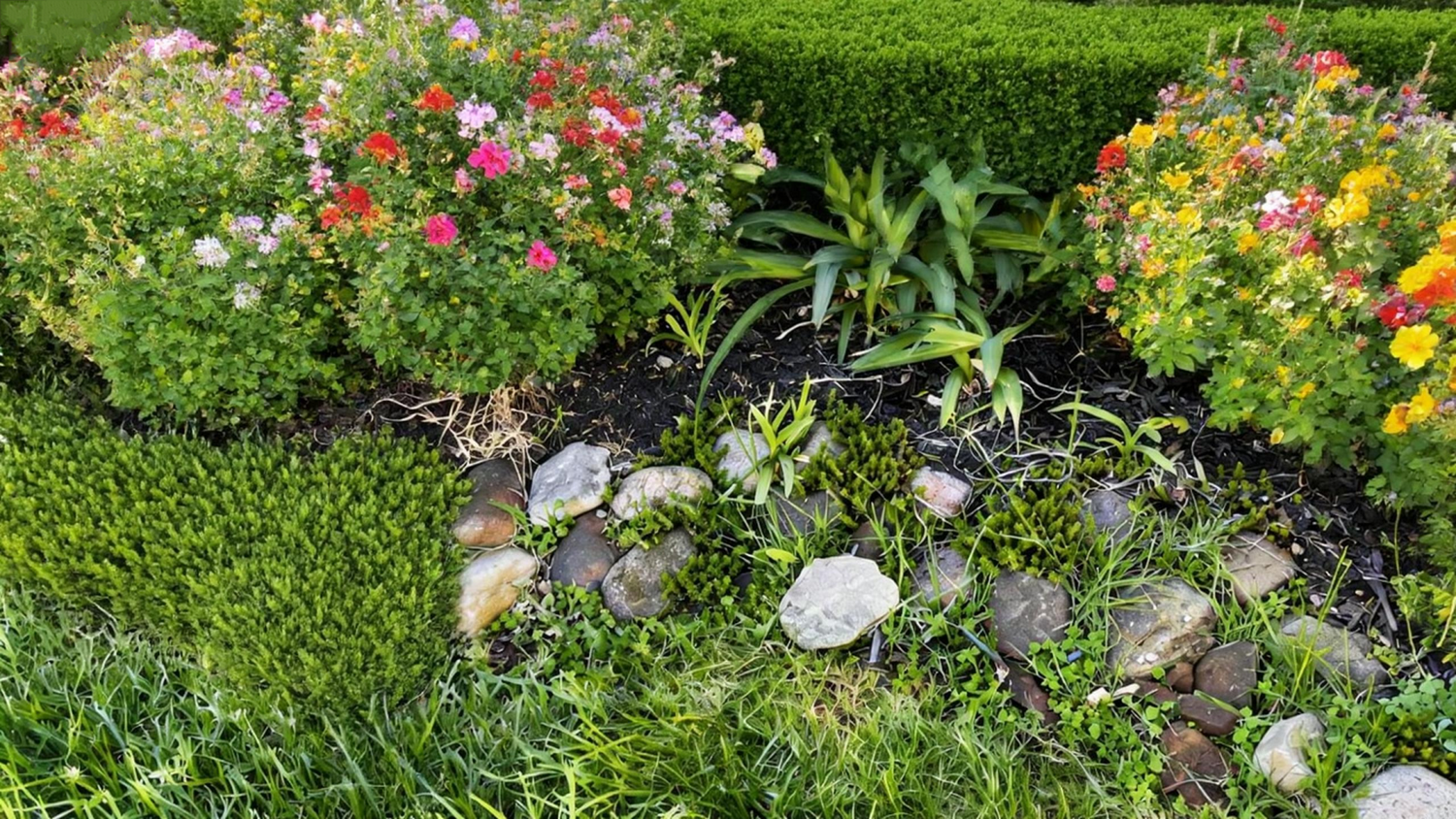
Think of lawn edging as the frame on a masterpiece. While a clean edge makes any yard look instantly professional, it’s also a constant battle against nature. Between grass creeping outward and the wear and tear from rain and local wildlife, those crisp lines don't stay sharp on their own. Even if you aren't aiming for a golf-course-perfect lawn, keeping the edges in check is the best way to stop hungry grass from invading your flower beds.
Ready to draw the line? Here are the best techniques to keep your lawn in its place.
Table of Contents
Causes of Messy Lawn Edges
Lawn edges typically lose their sharp definition and become "blurry" due to a combination of natural plant growth, environmental factors, and maintenance habits.
- Root Invasion: Without a deep enough physical barrier, these roots easily push under or through gaps in your edging to colonize garden beds.
- Overgrowth: If you wait too long between edging sessions, the grass simply grows over the boundary using underground stems (rhizomes) or surface runners (stolons), making the line look messy and eventually requiring you to "re-carve" the edge rather than just trimming it.
- Improper Mowing: Rushing or frequently changing directions while mowing can lead to crooked edges and uneven lines. Some mowers simply cannot reach the lawn edge and leave the edge grass untouched.
- Soil Erosion and Drainage: Heavy rain or poor drainage can wash topsoil away, filling in the crisp gaps you've cut or causing dirt to build up over the edging.
- Poor Border Materials: Cheap plastic edging often warps, cracks, or becomes brittle after exposure to UV rays and seasonal freeze-thaw cycles, losing its ability to hold a straight line. Impermanent borders like gravel stones have cracks in between, allowing grass roots to trespass.
Lawn Edging Techniques
Don't need to admire the clean-cut lawn edge of neighbors. To achieve a clean lawn edge, you can use several methods depending on your tools and whether you want a natural "live" edge or a permanent barrier.
Redefine Lawn Edges
When grass spreads through underground runners or surface creepers, your lawn edge disappears as it invades your garden beds or walkways. To stop this, you must combine a physical depth barrier with regular maintenance. Redefine edges with a half-moon edging tool. Work your way around the lawn, inserting the blade downwards to cut away slivers of grass. Use a flat shovel at an angle (about 45 degrees) from the bed side to meet the bottom of your vertical cut, creating a V-shaped trench. Create a drop. A drop of about 7.5cm (3in) from the lawn to the border helps keep plants off the grass, and grass out of the border. Remove excess soil with a spade or draw soil away from the lawn edge with a hoe. Pull out the slivers of turf and soil. This trench prevents grass roots from migrating into your beds.

Trim Lawn Edges
For most lawns, the edge has already been defined. But it becomes blurry over time, as the grass stretches outwards and goes out of style - just like your hair. Trim edges regularly, using edging shears after each time you mow your lawn. Always mow your lawn before edging to see the true height of the grass. This may be as often as once a week when the grass is in full growth. Hold edging shears upright for the best cut. Make sure the blades are beside the lawn edge. Keep the handle attached to the lower blade steady, and move the handle attached to the upper blade to cut overhanging grass. To maintain an existing edge, flip the trimmer head vertically and walk slowly along the boundary.

Work your way along the edge and, taking small sideways steps, slightly overlap your cuts to create a neat, crisp edge. Check afterwards for any missed tufts of grass. Rake up cut grass. Create small piles and collect them for composting. If only short sections have been cut off, they can be left or flicked into the border with your hoe to rot down.
Install Permanent Edging
Installing permanent lawn edging is the most effective way to stop grass from creeping into your garden beds, and it reduces long-term maintenance. For a barrier to be truly effective, it must be installed 4–6 inches deep to block underground root runners. You can create the permanent edging with different sorts of materials.

- Steel/Aluminum: Sleek, durable, and holds sharp lines well.
- Recycled Plastic: Flexible and budget-friendly, but can shift or warp over time if not installed deeply.
- Stone/Brick: High-end look but requires a more complex base (sand/gravel) to prevent sinking. Plaster is required to fill the gaps.
Prepare the essential tools, including a garden spade, rubber mallet, measuring tape, and marking equipment (string/stakes for straight lines or a garden hose for curves). Firstly mark the line and dig a step is to mark the line and dig a trench. Then, add a 1–2 inch layer of leveling sand or crushed gravel to the bottom of the trench and compact it. Next, you can place the material into the trench. The top should sit flush with the lawn surface or no more than 1/2 inch above it. This prevents grass from growing over the top while still allowing you to mow right over the edge without damaging your mower blades.
Summary of Lawn Edge Management
To fix a messy, overgrown lawn edge, use a manual half-moon edger or power edger to create a clean, 2-to-3-inch deep vertical cut, ideally in spring. Use a garden hose to outline, cut the edge, remove excess sod, and maintain it every 1–2 weeks with a string trimmer.

Leave a comment
This site is protected by hCaptcha and the hCaptcha Privacy Policy and Terms of Service apply.