











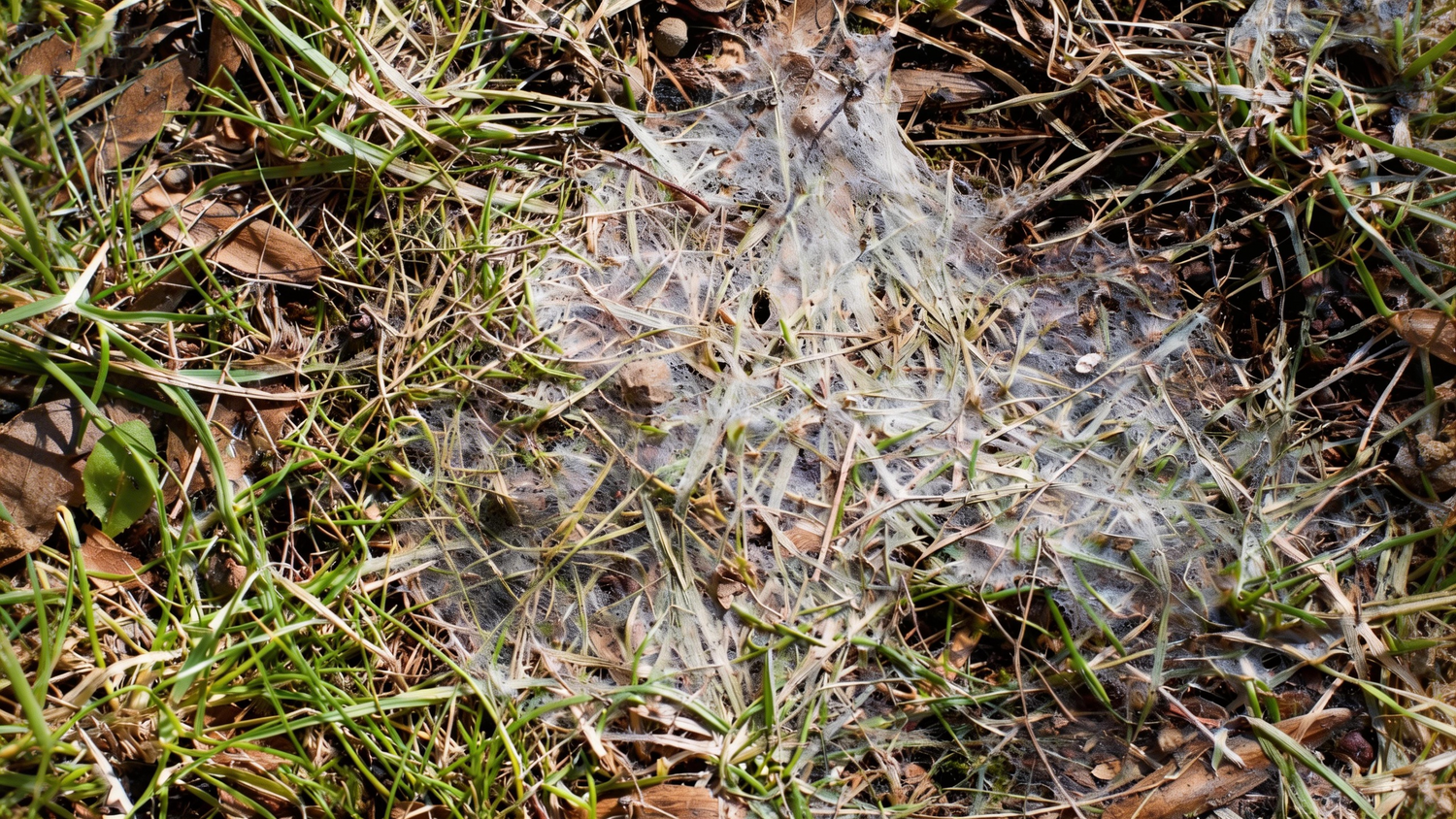
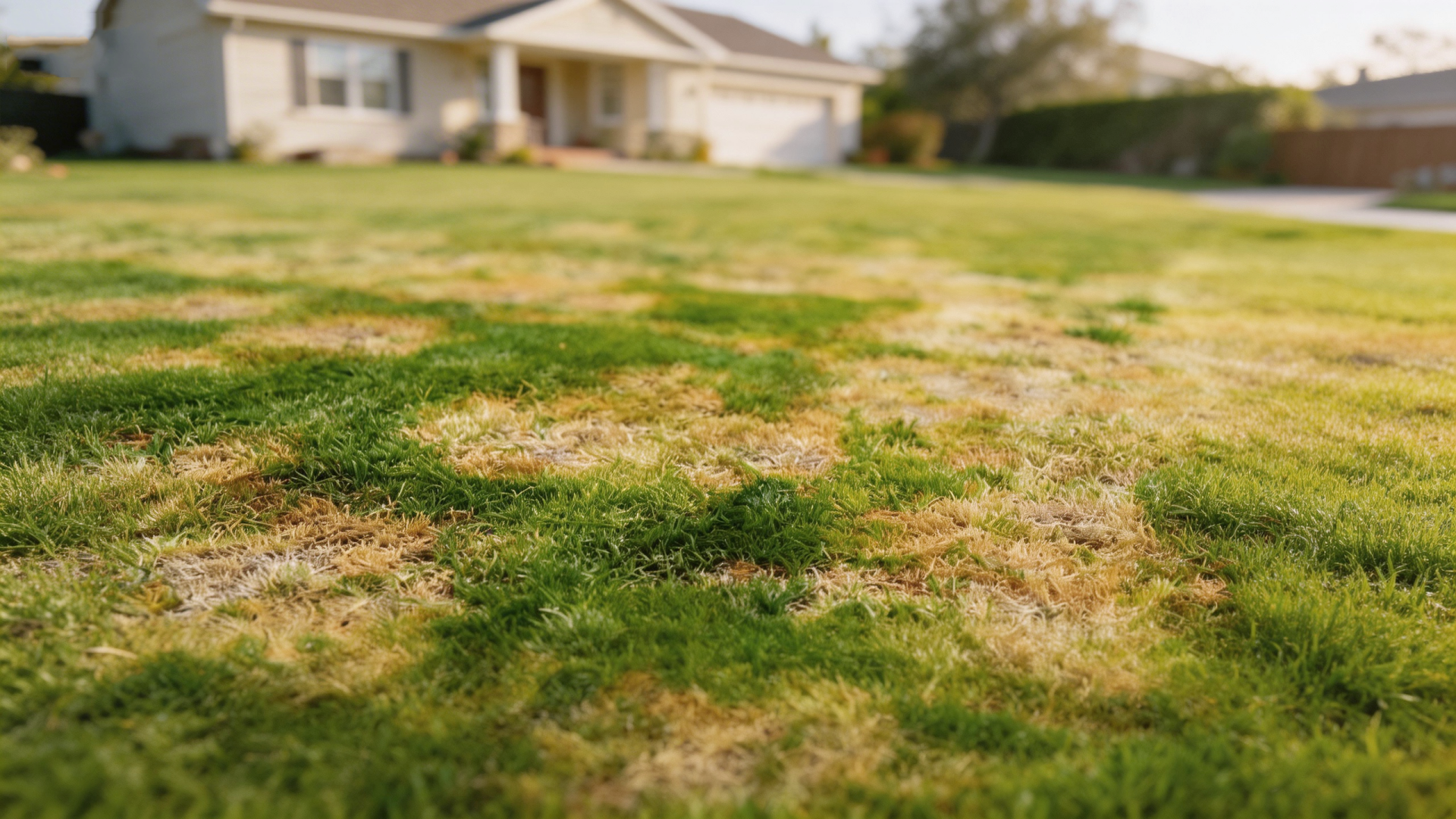
Grass molds, though they strike us as insect webs or eggs, are actually a collection of fungi that thrive in damp, shaded, or poorly drained conditions. That web on your lawn is the mycelium, and the eggs are actually the fruiting bodies of the molds, just like mushrooms. Some fungi do no harm to your lawn. But others may incur severe lawn diseases that can rapidly damage or kill your grass if ignored. Read on to learn about the lawn molds and find the most suitable way to deal with them.
Table of Contents
Key Types and Characteristics of Lawn Molds
Lawn molds, surprisingly, can adapt to a wide range of living conditions throughout the year, and that's why they will definitely appear in the lawn here and there. Lawn owners should better learn to identify different lawn molds before proceeding to the next steps. The most commonly seen molds are listed below:

Slime Molds: Appear as gray-white, yellow, or bluish-gray slimy patches, or as small black, powdery spots. They look like the grass was dusted with soot. Slime molds are most common in late summer and autumn. It is usually harmless to the lawn.
- Snow Molds (Gray or Pink): Appear as matted, bleached, or pinkish circles, often with fungal webbing. It thrives in cool, wet conditions—that’s why snow mold is most likely to appear in early spring as snow melts. Gray snow mold usually only harms grass blades, but pink snow mold can kill grass roots and crowns
- Powdery Mildew: White, powdery substance covering grass in shaded, humid spots. It is most common in semiarid regions and less common in areas with high rainfall. Powdery mildew prefers warm days and cool nights.
- Dollar Spot: Characterized by small, silver-dollar-sized tan patches that can merge. It is common in late spring to early summer.
- Red Thread: Recognizable by red or pink, needle-like threads extending from grass blades. It thrives in cool, wet spring weather.
Tips to Control Mold Spots
The appearance of mold often signals dying grass because they are feeding on decaying organic matter. Here is some advice to tackle lawn mold.
Leave Slime Mold as It Is
If the molds appearing in your lawn are identified as slime molds, the most effective course of action is to simply let nature take its course. Unlike many other lawn fungi, slime molds are not plant pathogens and do not cause diseases. Instead, they are primitive organisms that feed on decaying organic matter, bacteria, and protozoa found in the thatch layer. When it emerges, it just uses grass blades for structural support and does not require chemical treatment. Just leave it for a few days, and it will disappear on its own as the weather dries.
Water Early in the Day
Watering your lawn between 6 AM and 10 AM is the most effective way to prevent fungal outbreaks. This window allows the grass blades to absorb necessary moisture while ensuring that any excess water on the surface evaporates quickly as temperatures rise.
In contrast, watering in the late afternoon or evening creates a prolonged damp environment that becomes the breeding ground for spores. Furthermore, a consistently wet canopy allows the fungal disease to "swim", rapidly turning a small localized spot into a widespread infestation. By switching to an early schedule, you break the moisture cycle that fungus depends on to survive and spread.

Dethatch the Lawn
Thatch is a layer of organic matter between the crown of the grass plants and the soil layer. Thatch can appear as a result of an imbalance in your soil or improper lawn maintenance practices. If the microbes in your soil are not plentiful, they cannot devour the organic matter in the soil quickly enough. This may result in a thatch layer developing. Up to a half-inch of thatch is okay, but too much thatch robs the lawn of the ability to absorb water and nutrients efficiently. It can also cause fungus in the lawn.
We recommend removing thatch in the fall. Thatching brings up weed seeds, and these are more prevalent in the spring. Use a heavy rake or thatching machine as needed to keep thatch to a minimum. The regular use of organics will help to keep thatch in order.
Use a Bagging Mower
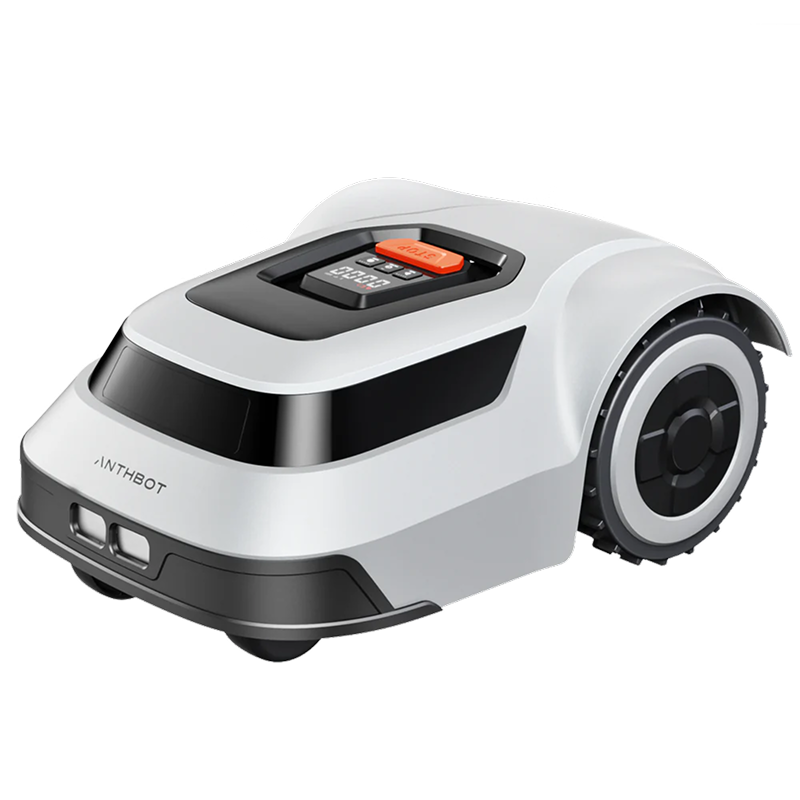
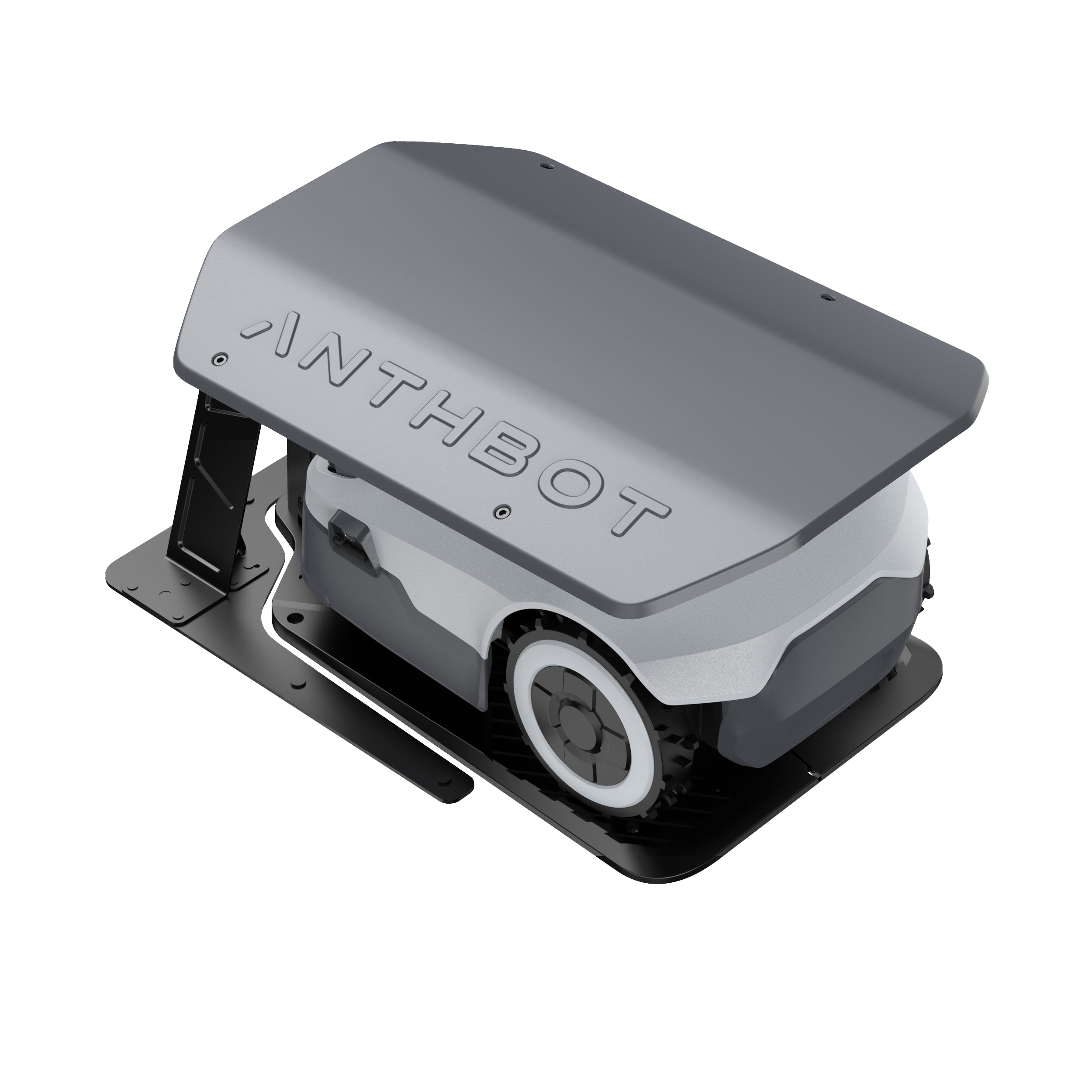
A catcher bag of the mower is ideal to remove active lawn mold, fungus, or mildew. Bagging the grass clippings while mowing can stop the disease from spreading by collecting infected spores rather than letting them fall back into the turf. For best results, mow with a sharp blade, bag all clippings, and disinfect your mower deck afterwards to stop further contamination. In this regard, the ANTHBOT N Series robot lawn mower can be very helpful, as it offers a smart bagging mode that removes all the grass clippings to your designated dumping sites automatically.

Mow with Sharp Blades at a Suitable Height
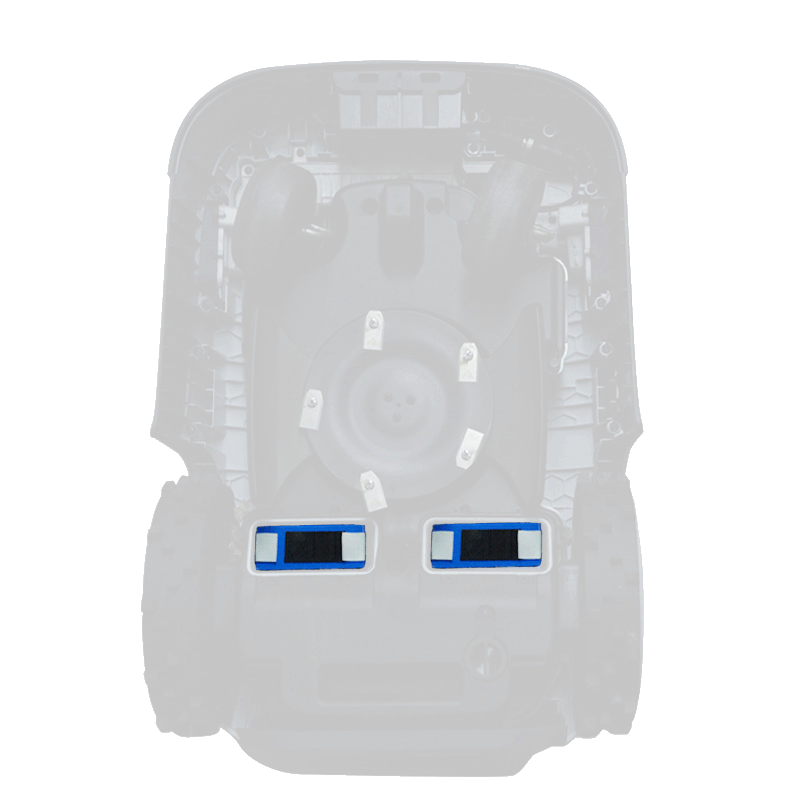
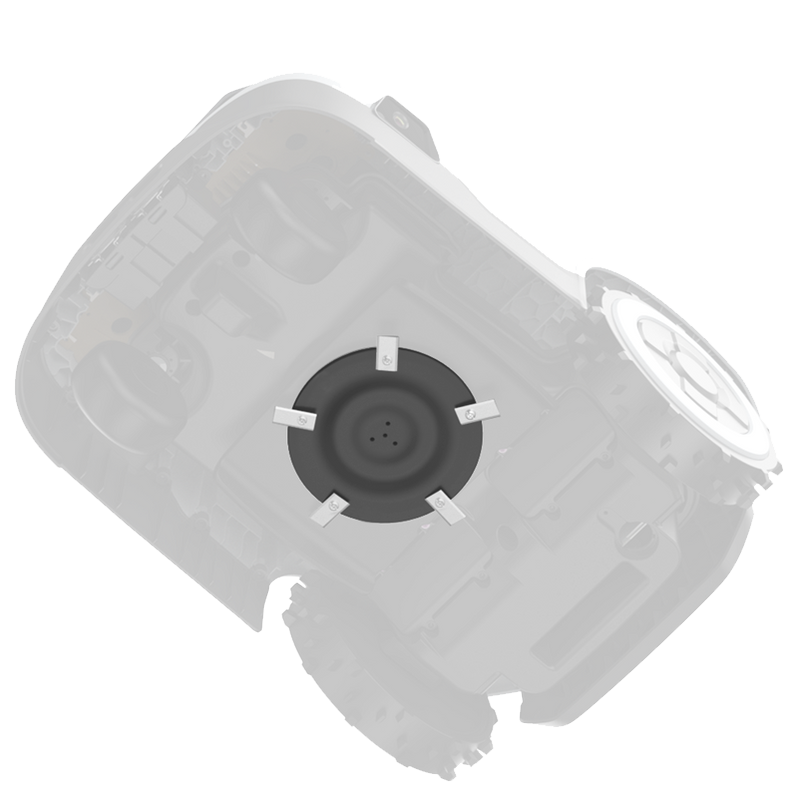
It is always important to mow with sharp mower blades, but especially so when trying to prevent lawn fungus. A dull blade can shred the grass blades, leaving many openings for disease to enter. When mowing, do not remove more than ⅓ of the grass blade. This will allow the grass to stay healthy and strong. Scalping the lawn(mowing too short) stresses the root system. Before winter, the lawn should be cut at no more than 3” and no less than 2” tall.
Natural and Organic Remedies
Lawn molds are actually not so tough as they look. For early-stage or mild infections, it is easy to find some effective home remedies right in your kitchen. For example, you can mix 4 tablespoons of neem oil per 5 liters of water and spray every few days. If neem oil is not available, just fetch some baking soda — mix 1 tablespoon with 5 liters of water and spray every 3 days. Be careful, as the salt content in baking soda can sometimes stress the grass further. You can also make use of compost tea to boost beneficial soil microbes that naturally outcompete harmful fungi.
Don’t Over- or Under-Fertilize
Use high nitrogen fertilizer only in the spring. High nitrogen in late October/November will promote snow mold next year. When lawns have the right nutrients they need to grow, they are less susceptible to disease. Diseases such as red thread can often be controlled by adding nitrogen to your lawn. In particular, please apply fall fertilizer at the proper time.
Apply a Fungicid
This should be your last line of defense. When it comes to lawn care, it is always better to prevent a problem than to fix it once it has occurred. Following prevention techniques will save you time, energy, and money. However, if your lawn currently has, or has had, fungus in the past, it is best to apply Lawn Fungus Control. This product will both treat and prevent lawn fungus.
Summary of Mold Control
Effective mold control involves a combination of preventative cultural practices—such as morning watering, bagging grass clippings, and reducing thatch—and, when necessary, systemic fungicides. The lawn molds are easy to control as long as you can identify their types and their living habits.


Leave a comment
This site is protected by hCaptcha and the hCaptcha Privacy Policy and Terms of Service apply.