


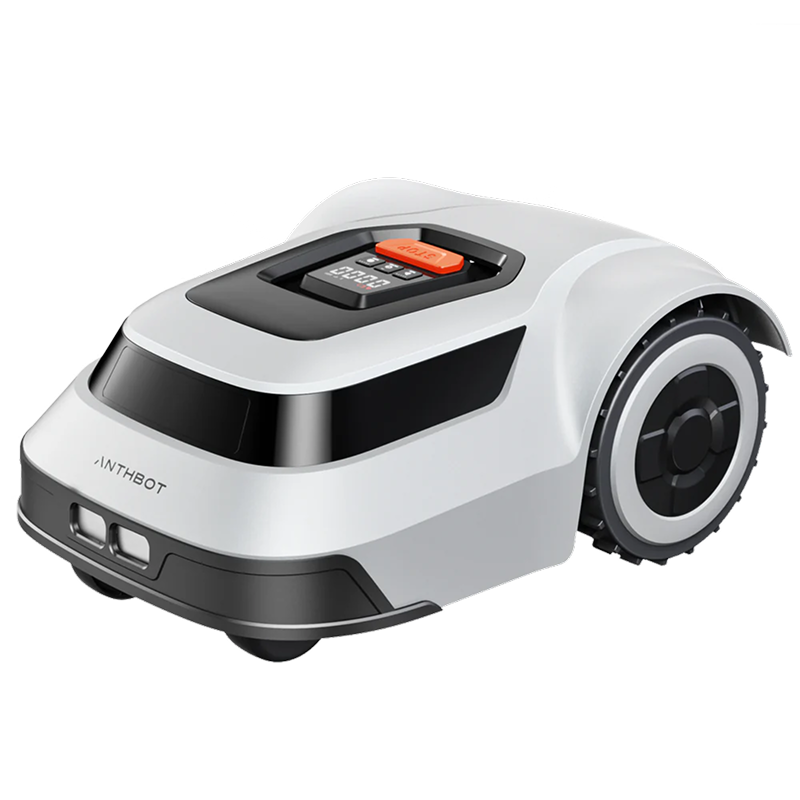
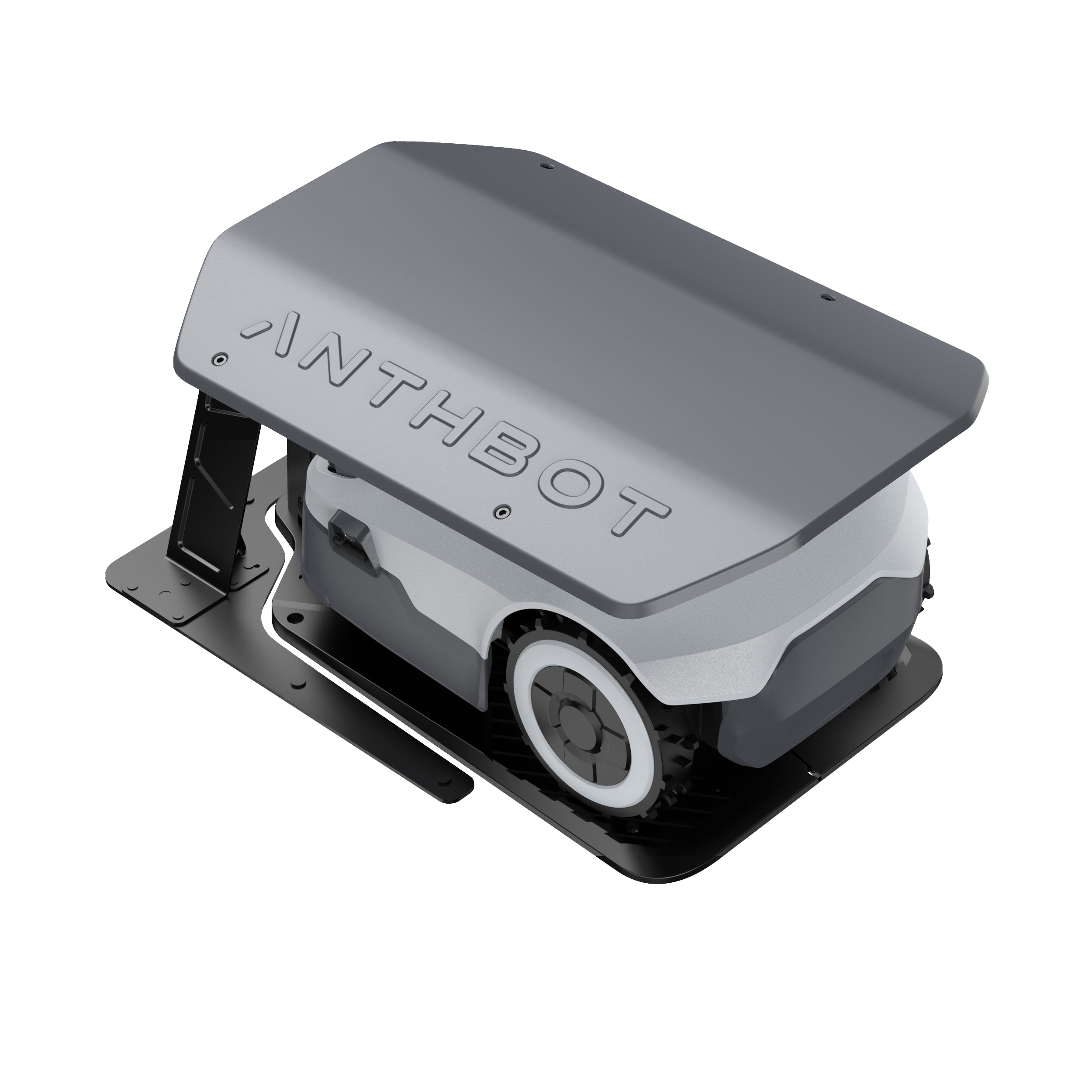
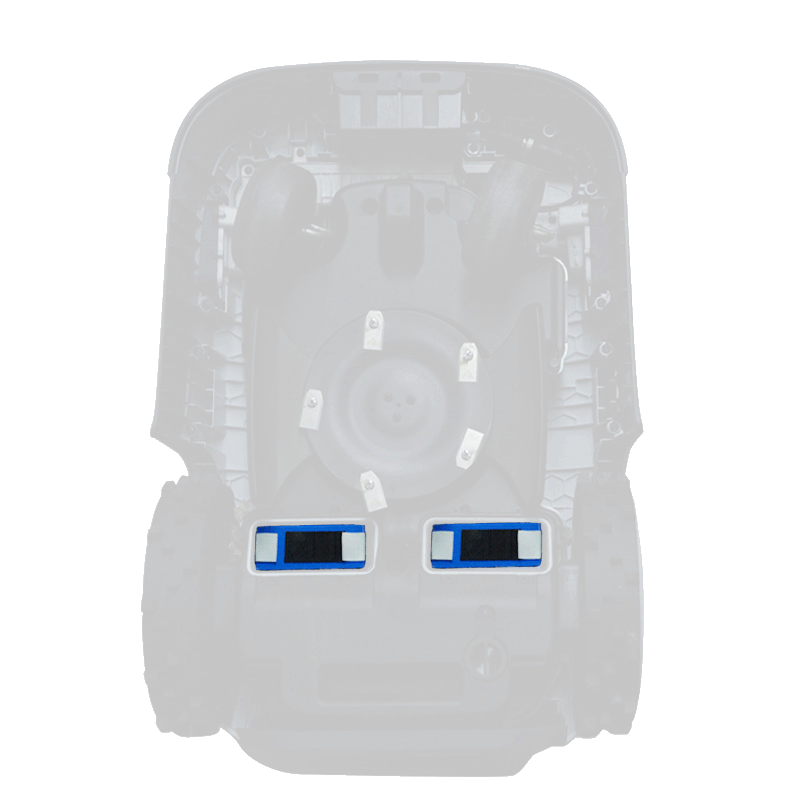
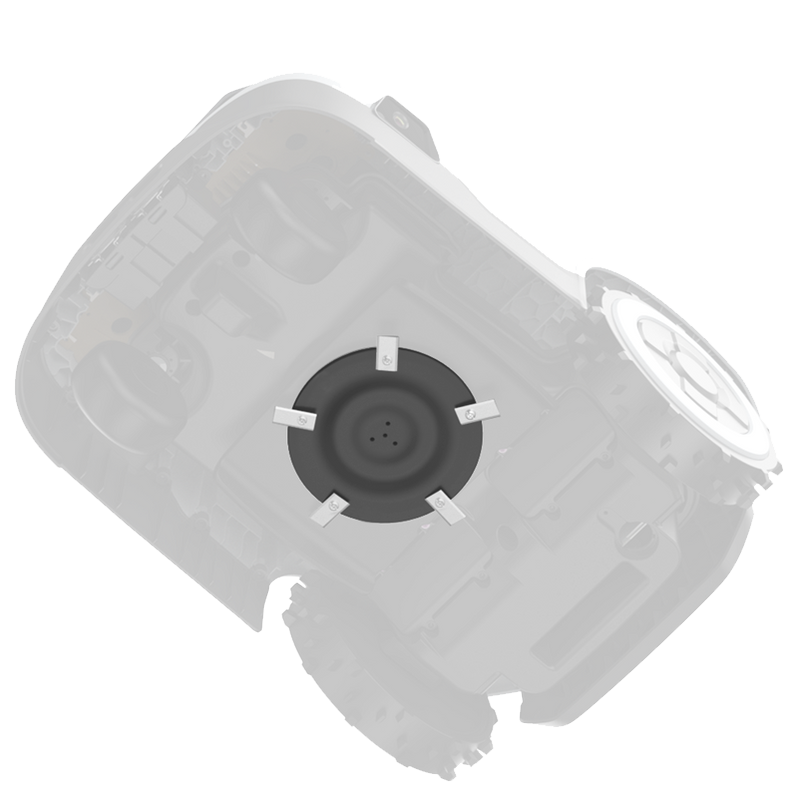








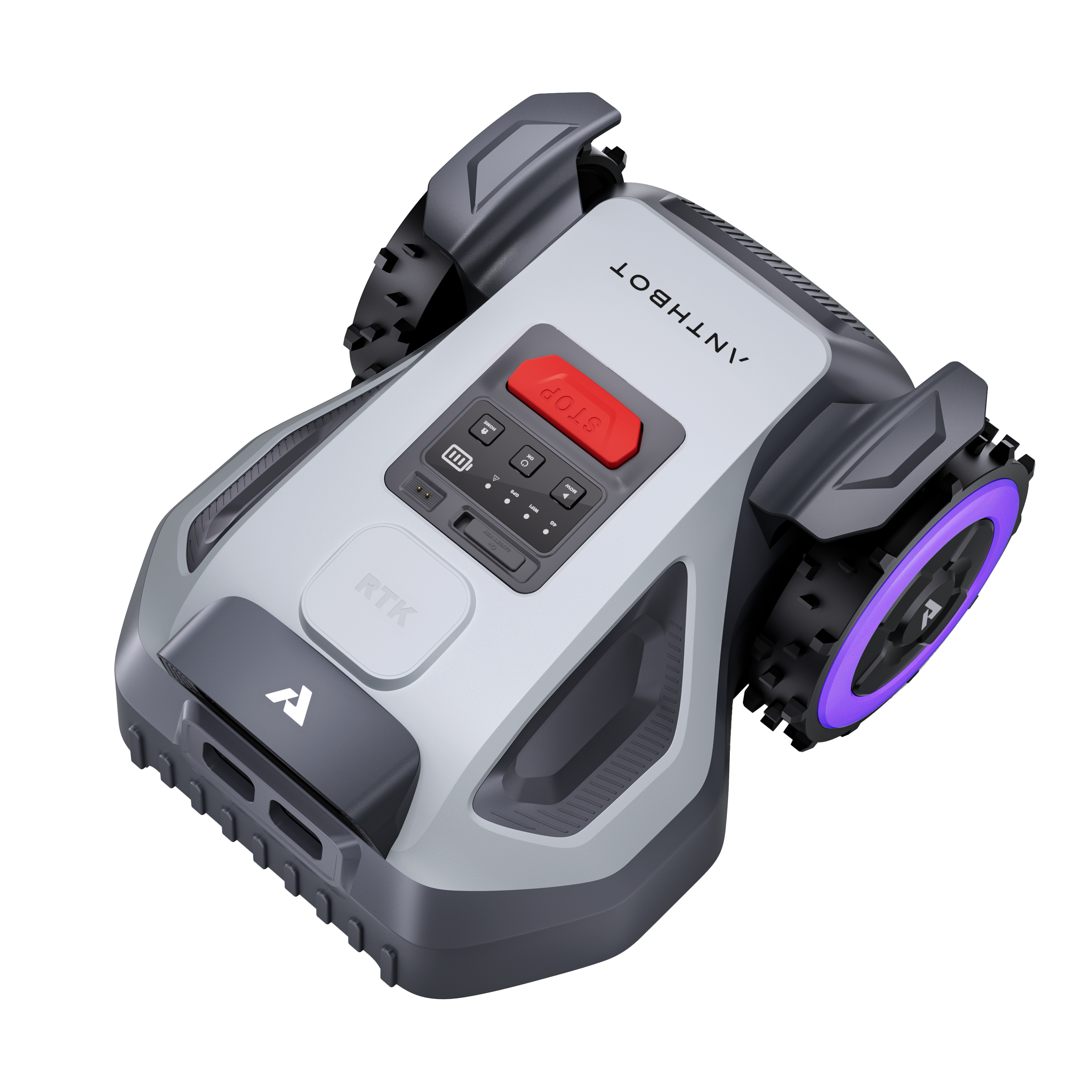
For many homeowners, lawn mowing and maintenance remain regular tasks that require significant time and effort. Traditional mowing methods can be labor-intensive, while early robotic lawn mowers often required boundary wires and complicated setup. As demand for smarter and more convenient lawn care continues to grow, RTK robot lawn mowers are becoming increasingly popular. With wire-free installation, precise navigation, and efficient mowing performance, they offer a more time-saving and hassle-free solution for modern lawn maintenance.

Table of Contents
Key Positioning Systems for Robotic Lawn Mowers
|
Navigation System |
How It Works |
Advantages |
Limitations |
|
Boundary Wire |
Physical wire defines the mowing area. |
Reliable and affordable. |
Requires installation and maintenance. |
|
Vision |
AI cameras identify boundaries and obstacles. |
Wire-free and flexible. |
Can be affected by lighting and weather conditions. |
|
RTK |
Uses satellite positioning with real-time corrections. |
Centimeter-level accuracy, virtual boundaries, efficient mowing patterns. |
Requires stable satellite signals. |
|
LiDAR |
Uses laser scanning to map surroundings. |
Works well in complex environments and GPS-challenged areas. |
Higher cost and increased hardware complexity. |
With its centimeter-level accuracy, wire-free setup, and efficient navigation, RTK has become a leading technology for many high-end robot lawn mowers. Compared with traditional boundary-wire systems, it offers more precise positioning and greater flexibility. As a result, many premium robot mowers now use RTK as their core navigation solution, often combined with AI vision or other sensors for enhanced performance.

How Do RTK Robot Mowers Work?
What Is RTK?
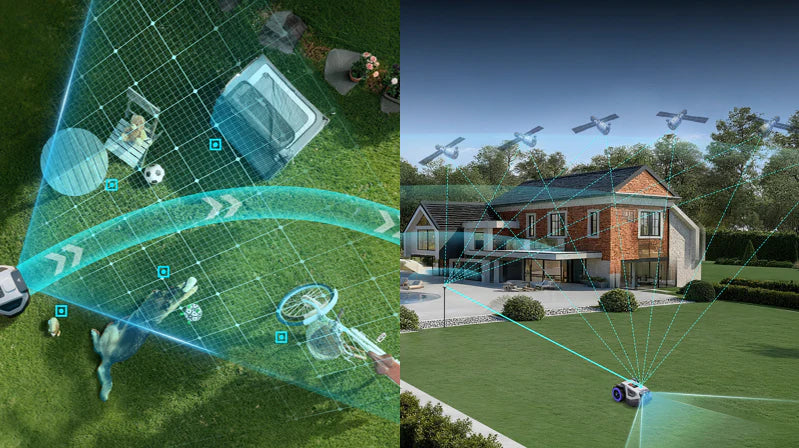
RTK is a high-precision positioning technology that improves standard GPS accuracy using real-time correction data from a reference station. By reducing positioning errors from several meters to just a few centimeters, RTK enables robot lawn mowers to navigate accurately, follow planned mowing paths, and create virtual boundaries without perimeter wires, resulting in more efficient coverage and consistent mowing performance.
How RTK Works
1.GNSS Satellites
The mower receives signals from multiple GNSS networks, such as GPS, Galileo, GLONASS, and BeiDou. These satellites provide the initial positioning data needed to determine the mower's location.
2.RTK Base Station
An RTK base station is placed at a fixed location with known coordinates. By comparing its actual position with the satellite-calculated position, it can detect small positioning errors in the GNSS data.
3.Correction Signals
The base station generates correction data and transmits it to the mower in real time. These corrections help compensate for signal errors caused by atmospheric conditions and other environmental factors.
4.Real-Time Positioning
The mower combines satellite data with correction signals to continuously update its position with centimeter-level accuracy. This allows it to follow planned mowing paths, stay within virtual boundaries, and cover the lawn more efficiently with fewer missed areas.

RTK Mapping Process
1.Initial Mapping
The mower first records the layout of the lawn using RTK positioning. During this process, it identifies the mowing area and gathers the information needed to create a digital map.
2.Virtual Boundary Creation
Based on the mapped area, users can set virtual boundaries through a mobile app. These digital boundaries define where the mower can operate without requiring physical perimeter wires.
3.Route Planning
Using the digital map and RTK positioning data, the mower calculates efficient mowing paths. Instead of moving randomly, it follows organized routes to improve coverage and reduce overlap.
4.Autonomous Mowing
Once the map and routes are established, the mower can operate autonomously. It follows the planned paths, stays within virtual boundaries, and adjusts its movement as needed to maintain efficient lawn coverage.

Key Advantages of RTK Mowers
No Boundary Wires Required
RTK robot lawn mowers eliminate the need for perimeter wires. Users can create and adjust virtual boundaries through a mobile app, making installation faster, simpler, and more flexible. It also makes future lawn layout changes much easier.
Centimeter-Level Accuracy
RTK technology provides centimeter-level positioning, allowing the mower to follow precise mowing paths and navigate accurately across the lawn. This helps deliver cleaner mowing results and more consistent coverage.
Efficient Coverage
Unlike random navigation systems, RTK mowers follow planned mowing routes. This reduces unnecessary overlap, minimizes missed areas, and improves overall mowing efficiency.
Multi-Zone Management
Most RTK mowers support multiple mowing zones, allowing users to manage separate lawn areas through the app. Different schedules and mowing settings can be assigned to each zone, making maintenance more convenient for complex properties.
Smart App Control
Users can create maps, edit virtual boundaries, adjust mowing settings, monitor progress, and control the mower remotely from a mobile app. This provides greater convenience and control over daily lawn care.
Ideal for Large Lawns
RTK technology is particularly well suited for large lawns, where precise positioning and efficient route planning are essential. By following systematic mowing patterns, RTK mowers can cover larger areas more efficiently while reducing overlap and unnecessary battery consumption.

RTK Mower Limitations
Satellite Signal Dependency
RTK robot lawn mowers rely on GNSS satellite signals for positioning. In areas with weak or unstable signals, navigation accuracy and mowing precision may be reduced.
Performance Under Trees
Dense tree cover can interfere with satellite reception, which may affect positioning accuracy and navigation stability in heavily shaded areas.
Issues Near Buildings
Tall buildings, walls, and narrow passages can block or reflect satellite signals, sometimes reducing positioning precision in complex landscapes.
Base Station Setup Requirements
RTK systems require a properly positioned base station with a clear view of the sky. Incorrect placement can affect correction data and overall navigation performance.
Higher Cost
RTK mowers are typically more expensive than boundary-wire or basic GPS models due to their advanced technology and additional hardware. However, they offer greater precision, automation, and convenience.
RTK vs LiDAR: Which Navigation Technology Is Better?
|
Feature |
RTK |
LiDAR |
|
Open Lawn |
Approximately 2–3 cm positioning accuracy; best efficiency on large open areas |
Approximately 2–5 cm mapping accuracy; good but less scalable for very large open lawns |
|
Tree Coverage |
Accuracy may drop by 20–50% under dense canopy due to GNSS blockage |
Maintains 2–3 cm relative mapping accuracy even under trees |
|
Night Operation |
Fully operational if GNSS signal is stable |
Fully operational using laser scanning (no light required) |
|
GPS Dependence |
Requires GNSS + RTK correction signals |
No GPS required; relies on LiDAR scanning and SLAM mapping |
|
Complex Layouts |
Handles irregular layouts well but may lose precision in signal-poor zones |
Strong performance; maintains stable mapping in narrow or complex spaces |
RTK and LiDAR are both advanced navigation technologies, but they excel in different conditions. RTK offers centimeter-level accuracy and efficient mowing in open lawns, while LiDAR performs better in shaded or complex environments. Many premium robot lawn mowers combine both technologies to achieve high precision and strong adaptability.

Common RTK Robot Mower Issues
RTK Signal Loss
Symptoms:
The mower stops mowing, shows “RTK/GNSS signal weak” warnings, or enters a reduced-accuracy mode. In some cases, navigation accuracy may drop from centimeter-level to meter-level temporarily.
Causes:
GNSS signal blockage from trees, buildings, or weather conditions. Signal quality typically drops by 30–70% in heavily obstructed environments.
Solutions:
Move the mower to open-sky areas, avoid dense tree coverage, and ensure no new obstacles block satellite visibility.
Base Station Connection Problems
Symptoms:
The mower cannot connect to the RTK base station, or positioning becomes unstable with deviations of 10–50 cm or more.
Causes:
Improper installation, power interruption, excessive distance (often beyond 300–1000m range depending on model), or physical obstruction.
Solutions:
Place the base station in an elevated, open area with 360° sky visibility, ensure stable power supply, and keep within the supported communication range.
Mapping Errors
Symptoms:
Inaccurate lawn boundaries, missing zones, or map offsets of 0.5–2 meters after setup.
Causes:
Weak RTK signal during initial mapping or interruptions during the mapping process.
Solutions:
Redo mapping in stable conditions with strong RTK signal (typically >20 satellites visible), and complete the mapping process without interruptions.
Boundary Drift
Symptoms:
Slight boundary deviation over time, with errors typically ranging from a few centimeters up to 20–30 cm.
Causes:
Cumulative positioning drift, temporary RTK signal instability, or outdated map calibration.
Solutions:
Recalibrate the map, refresh boundary settings periodically, and ensure stable RTK signal during operation.
App Connectivity Issues
Symptoms:
Delayed commands (2–10 seconds latency), disconnection from the mower, or failure to update real-time status.
Causes:
Weak Wi-Fi/Bluetooth signal, network congestion, or interference from nearby devices.
Solutions:
Improve network coverage, reduce interference, restart the app, or reconnect the device.
Firmware Problems
Symptoms:
System glitches, reduced navigation accuracy after updates, or temporary instability in mowing patterns.
Causes:
Outdated firmware or incomplete update installation. Performance issues may appear in 5–15% of failed or interrupted updates.
Solutions:
Regularly check for updates, reinstall firmware if needed, and restart the mower after updates to ensure full system recalibration.
Real-World User Experiences
Positive Feedback
Many users praise RTK robot lawn mowers for their precise navigation and organized mowing patterns. Compared with random-navigation models, RTK mowers typically provide cleaner lawn coverage, fewer missed spots, and more efficient operation. Users also appreciate the convenience of virtual boundaries, which eliminate the need for installing and maintaining perimeter wires.
Common Complaints
The most common complaints involve signal-related issues. Some users report reduced performance under dense trees, near tall buildings, or in areas with limited satellite visibility. Others mention the initial setup process, particularly base station placement and mapping, which may require some time and adjustment to achieve optimal accuracy.
Best Use Cases
RTK robot lawn mowers perform best on medium to large lawns with a clear view of the sky. They are particularly well suited for homeowners who want wire-free installation, precise mowing patterns, and efficient coverage of multiple lawn zones. Properties with open layouts and minimal signal obstruction typically achieve the best results.

Choosing the Right RTK Robot Mower
Lawn Size
Start by considering your lawn size. Most RTK mowers are designed for areas ranging from 1,000 m² . Choosing a model with a coverage rating slightly larger than your lawn can help ensure efficient mowing and shorter completion times.
Tree Coverage
If your lawn contains dense trees or shaded areas, satellite signals may be partially blocked. In these environments, models that combine RTK with AI vision or additional sensors often provide more reliable navigation and positioning.
Slope Capability
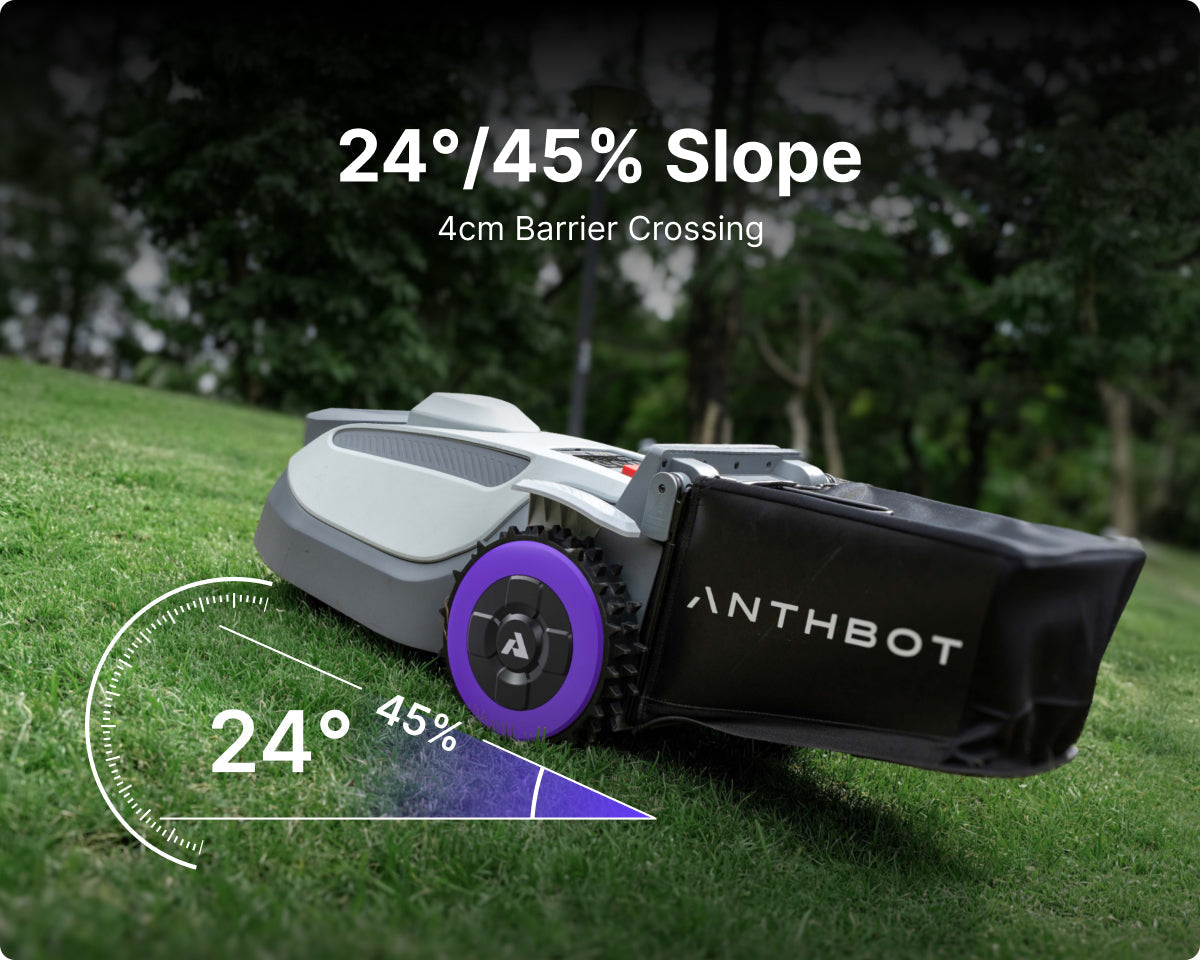
Slope performance varies by model. Most RTK mowers can handle slopes of 45%, while some advanced models can manage gradients up to 60-80% . Choose a mower that exceeds the steepest slope on your property.
Navigation System
RTK provides centimeter-level positioning accuracy, making it ideal for systematic mowing. For lawns with complex layouts, narrow passages, or shaded areas, models that combine RTK with vision or LiDAR can offer improved stability and obstacle detection.
Battery Capacity
Battery capacity affects runtime and mowing efficiency. Most RTK mowers operate for 40–240 minutes per charge and can cover several hundred to several thousand square meters before returning to recharge.
Smart Features
Look for features such as virtual boundaries, multi-zone management, app control, scheduling, and real-time mower tracking. These functions make it easier to manage mowing tasks, adjust settings, and monitor the mower remotely.
After-Sales Support
Reliable customer support is just as important as hardware performance. Consider warranty coverage, software update frequency, spare parts availability, and service response times. Strong after-sales support can help extend product lifespan and reduce maintenance concerns.

Top RTK Robot Lawn Mowers in 2026
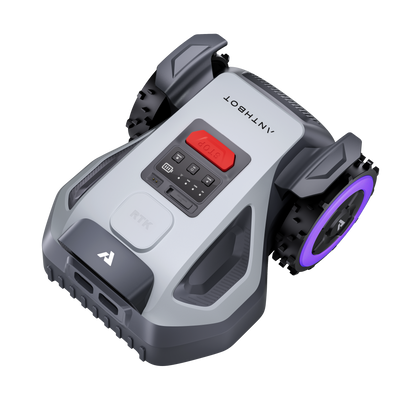
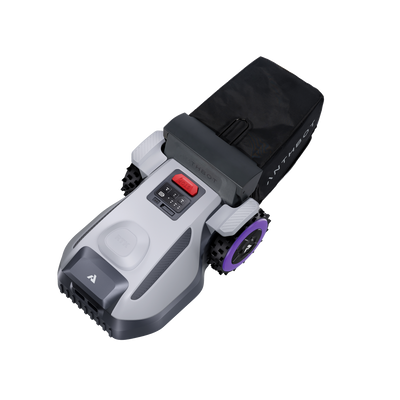
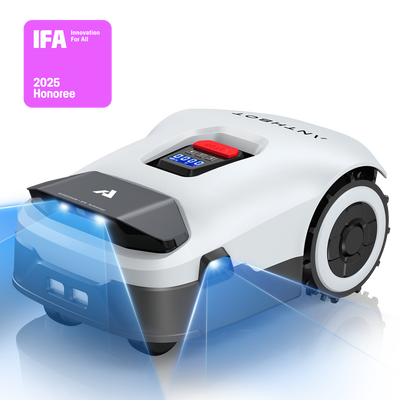
ANTHBOT M5
The ANTHBOT M5 is designed for lawns up to 500㎡ and combines Full-Band RTK with dual-vision navigation for precise wire-free mowing. Its compact design, intelligent route planning, and app-based controls make it a practical solution for homeowners seeking accurate and efficient lawn maintenance.

ANTHBOT M9
Built for lawns up to 1,000㎡, the ANTHBOT M9 combines RTK positioning with dual HDR cameras to deliver reliable navigation in more complex environments. With AI obstacle avoidance and efficient mowing patterns, it provides consistent coverage and a smooth autonomous mowing experience.
ANTHBOT N8
The ANTHBOT N8 is designed for larger lawns up to 1,500㎡ and features an innovative 4-in-1 system that combines mowing, mulching, collecting, and sweeping. Equipped with Full-Band RTK, dual-vision navigation, and multi-zone management, it offers a more comprehensive lawn care solution while reducing manual work.
ANTHBOT Genie
The ANTHBOT Genie combines Full-Band RTK, AI vision, and intelligent navigation to achieve precise wire-free mowing. Features such as smart obstacle avoidance, automatic route optimization, and multi-zone management make it a strong option for users looking for a highly automated lawn care experience.
Future Developments in RTK Mower Tech
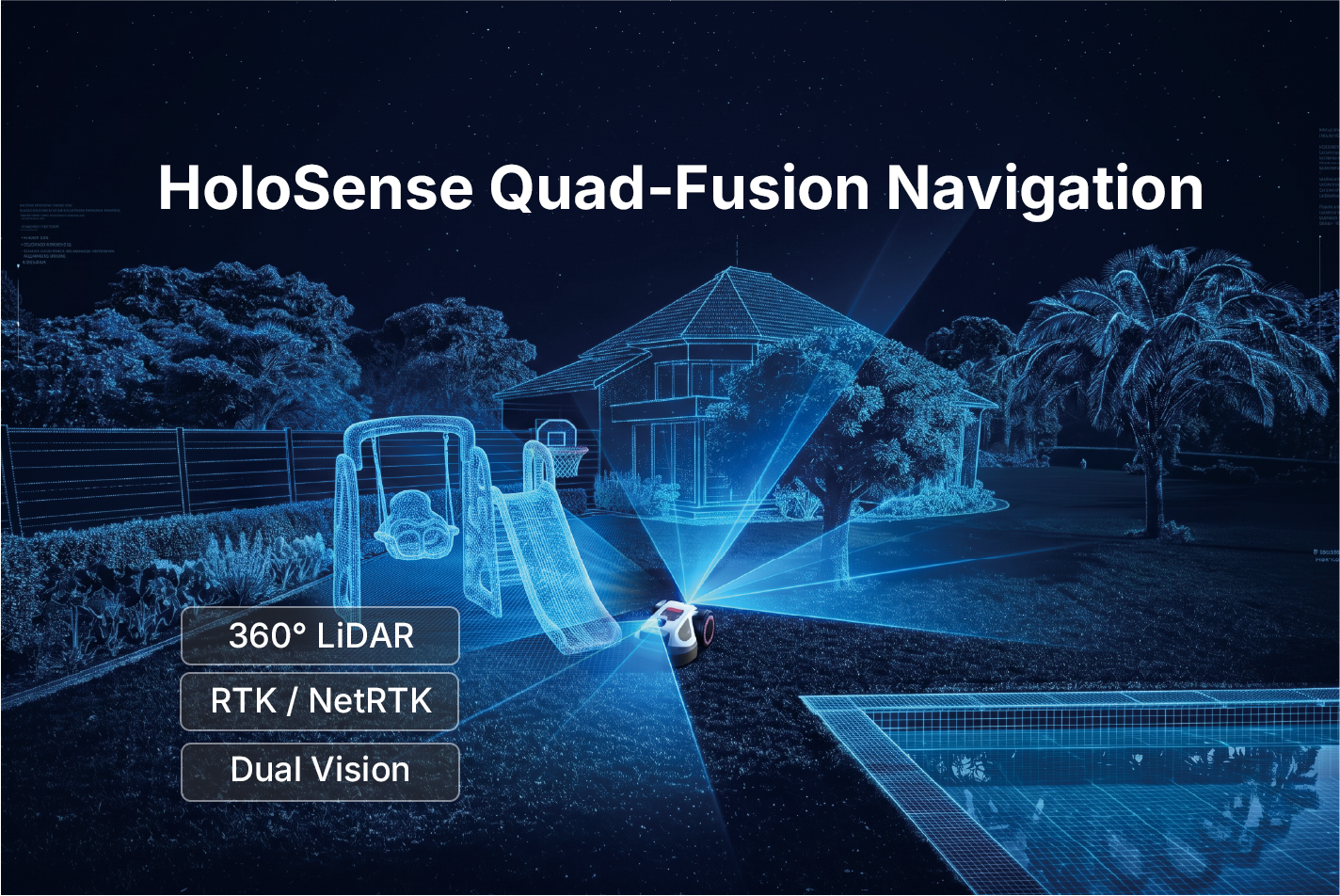
RTK + Vision Fusion
Future RTK robot lawn mowers will combine RTK positioning with AI-powered cameras. RTK provides precise location data, while vision systems help identify lawn boundaries, obstacles, and changing surroundings. This combination improves navigation accuracy and maintains reliable performance in areas with partial signal obstruction.
RTK + LiDAR Fusion
RTK and LiDAR will increasingly work together to enhance navigation. RTK delivers centimeter-level positioning, while LiDAR creates detailed 3D maps of the environment. The combination enables more stable operation, better terrain awareness, and improved performance in complex lawns.
AI Obstacle Recognition
Advanced AI will allow robot mowers to recognize and classify obstacles such as pets, people, toys, and garden furniture. This enables smarter avoidance decisions, improving both safety and mowing efficiency while reducing unnecessary interruptions.
Fully Autonomous Lawn Management
Future mowers will do more than cut grass. By analyzing lawn conditions, grass growth, and weather data, they will automatically optimize mowing schedules and routes, creating a more hands-free lawn care experience.
Smart Home Integration
RTK robot mowers are expected to integrate with smart home platforms, voice assistants, weather services, and irrigation systems. This connectivity will make lawn maintenance more convenient, automated, and efficient.
FAQ
Do RTK mowers need boundary wires?
RTK robot lawn mowers use virtual boundaries instead of physical boundary wires, making setup simpler and more flexible.
Is RTK better than GPS?
RTK provides centimeter-level accuracy, while standard GPS is typically accurate within a few meters. This makes RTK better suited for precise lawn mowing.
Is RTK better than LiDAR?
RTK and LiDAR serve different purposes. RTK focuses on accurate positioning, while LiDAR improves environmental awareness. Many advanced mowers combine both technologies.
Do RTK mowers work at night?
RTK navigation works day and night because it relies on satellite signals rather than daylight. Performance may vary depending on the mower's obstacle detection system.

Leave a comment
This site is protected by hCaptcha and the hCaptcha Privacy Policy and Terms of Service apply.