








Table of Contents
Why Edge Cutting Is the Biggest Challenge for Robot Lawn Mowers
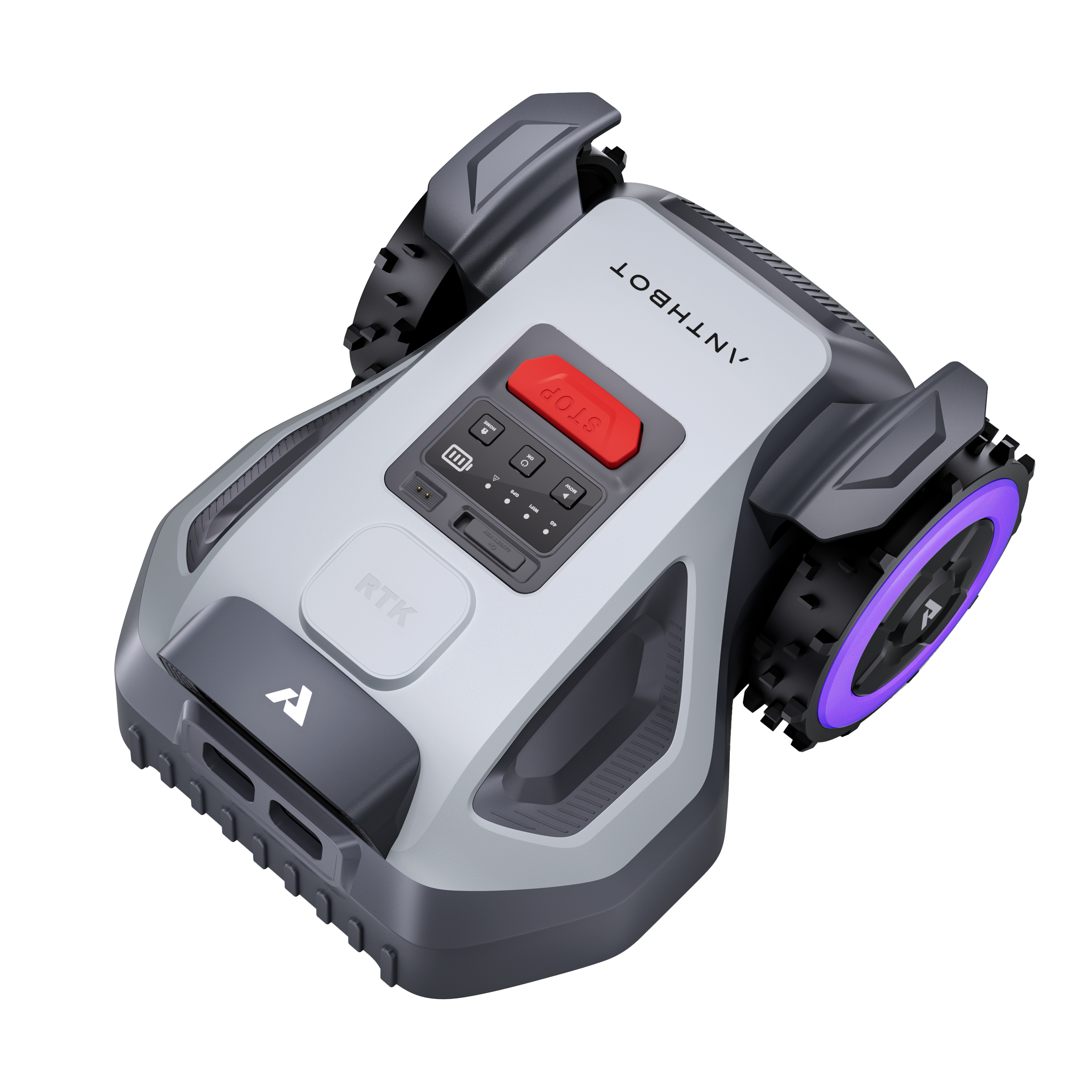
Robot lawn mowers can handle most of the lawn automatically, but edges are often where the biggest gaps remain. After the mower finishes, you may still find uncut grass along walls, fences, flower beds, paths, or other borders.
The reason is simple: a robot mower needs to balance cutting close to the edge with keeping its wheels and body safely inside the mowing area. The result depends on more than just how close the blades are to the mower's outer edge.
Modern models are addressing this problem with dedicated edge-mowing functions, more accurate navigation, and improved cutting-disc designs. These technologies aim to reduce the amount of grass left around the edges—and, in turn, reduce the need for manual trimming.
But how does edge cutting actually work, and what makes one robot mower better at it than another?

Why Does Edge Cutting Matter?
A robot lawn mower can keep the main lawn neatly trimmed, but uncut grass along the edges can make the whole lawn look unfinished. Good edge cutting is therefore about more than appearance—it can also reduce the amount of manual work after mowing.
A Cleaner Lawn
Grass along paths, walls, flower beds, and other borders can become noticeable when the mower cannot reach close enough to the edge. Better edge cutting helps create a more consistent finish across the lawn.
Less Manual Trimming
If a mower consistently leaves a strip of grass around the perimeter, you still need a string trimmer or lawn edger to finish the job. Effective edge mowing can reduce how often this extra work is needed.
Better Use of Automation
One of the main reasons to buy a robot lawn mower is to reduce manual lawn care. The closer it can safely mow to different boundaries, the more of the routine mowing it can handle on its own.
Edge Cutting Doesn't Mean Cutting Against Every Wall
It's important to have realistic expectations. A robot mower may not be able to cut directly against vertical walls, raised borders, fences, or irregular edges because it needs to maintain a safe distance.
The goal of good edge cutting is therefore not necessarily to eliminate every last blade of grass, but to minimize the uncut strip and reduce the need for manual trimming.

How Does Robot Lawn Mower Edge Cutting Work?
Edge cutting depends on several systems working together. It is not simply a matter of moving the blades closer to the outside of the mower.
1. Cutting Disc Position
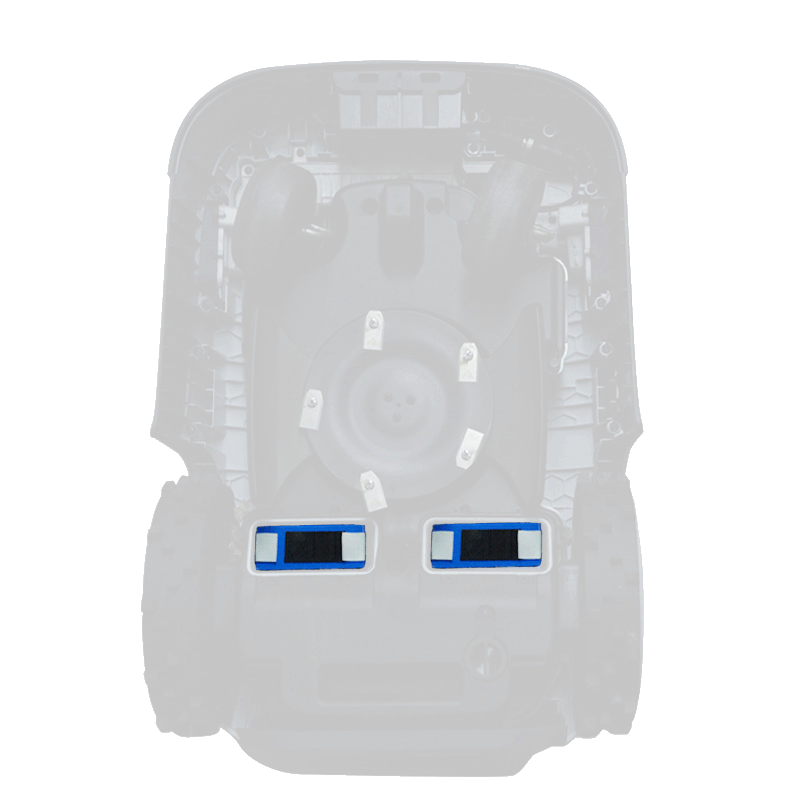
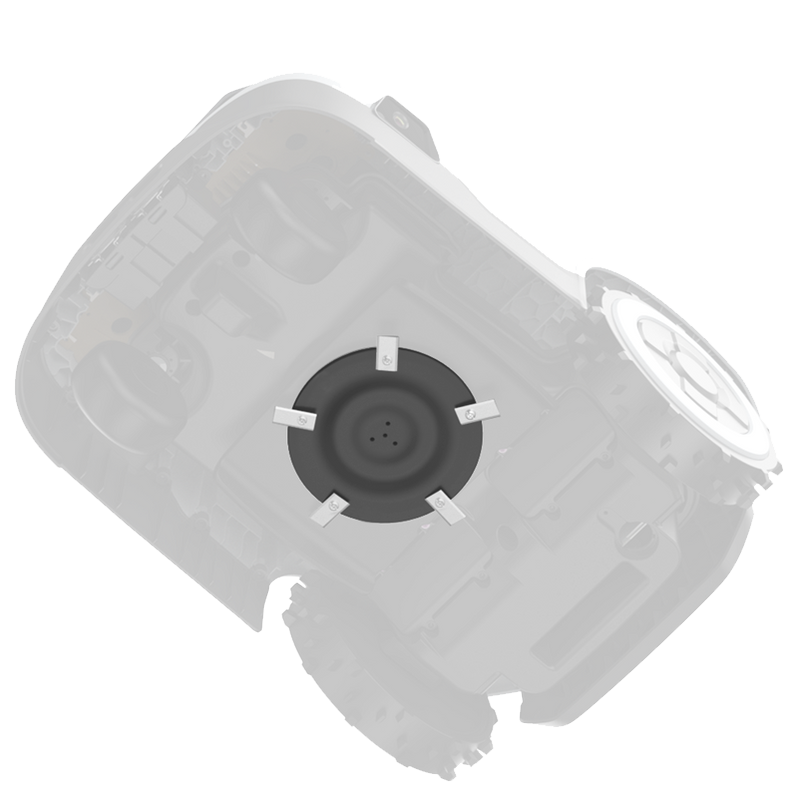
The position of the cutting disc is important. When the blades extend closer to the mower's outer edge, they can reach more grass near the boundary.
However, blade position alone cannot eliminate all uncut grass.
2. Wheel and Body Position
The mower needs to keep its wheels and body safely within the mowing area while getting as close to the edge as possible.
This creates a balance between cutting coverage and safe movement. The type of boundary also affects how close the mower can safely approach.
3. Navigation Accuracy
The mower must accurately determine where the lawn ends and plan an appropriate path along the boundary.
More precise navigation can help the mower follow the edge consistently instead of leaving an unnecessarily wide strip of uncut grass.
4. Edge-Mowing Algorithms
Some models have dedicated edge-mowing modes that change the mower's path when it reaches the lawn boundary. Instead of simply following its normal mowing pattern, the mower can make additional passes along the perimeter.
5. Putting It All Together
Effective edge cutting is therefore a combination of:
Cutting Disc Position + Mower Position + Navigation + Edge-Mowing Path
A mower with advanced navigation but poor blade placement may still leave grass near the edge. Likewise, a mower with blades positioned close to the outer body may not perform well if it cannot accurately follow the boundary.
In short: Good edge cutting comes from the combination of mechanical design and intelligent navigation, rather than from a single feature.

What Affects Robot Lawn Mower Edge Cutting Performance?
Not every lawn edge is the same. A robot mower may cut very close to a flat pavement edge but leave more grass along a wall or raised flower bed.
1. Type of Lawn Edge
The boundary itself has a major impact on cutting performance:
|
Lawn Edge |
Edge Cutting Difficulty |
|
Grass → Flat pavement |
Easy |
|
Grass → Concrete |
Easy–Medium |
|
Grass → Paving stones |
Medium |
|
Grass → Flower bed |
Medium–Hard |
|
Grass → Fence |
Hard |
|
Grass → Wall |
Hard |
|
Raised or uneven edge |
Hard |
Flat, level surfaces generally allow the mower to approach closer to the edge. Raised or irregular boundaries require more clearance.
2. Blade-to-Edge Distance
The closer the cutting blades are to the mower's outer edge, the more grass they can potentially reach.
However, the mower still needs enough clearance for its wheels and body, so blade placement cannot solve every edge-cutting problem.
3. Navigation Accuracy
The mower needs to know exactly where the boundary is. If it stays too far away for safety or positioning reasons, a visible strip of grass may remain.
Accurate navigation allows the mower to follow the boundary more consistently.
4. Edge-Mowing Strategy
Some models use a dedicated edge-mowing mode or special path planning to make additional passes along the perimeter.
This can help reduce missed areas compared with simply relying on the mower's standard mowing pattern.
5. Garden Layout
Corners, narrow passages, trees, fences, and irregular lawn shapes can make edge cutting more difficult.
Which Robot Lawn Mower Is Best for Edge Cutting?
If edge cutting is a priority, look for a mower that combines accurate navigation, dedicated edge-mowing functions, and a cutting design that can reach close to the mower's outer edge.
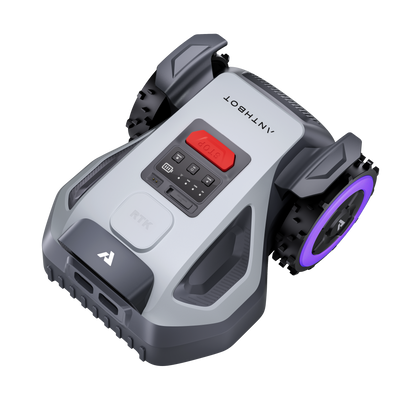
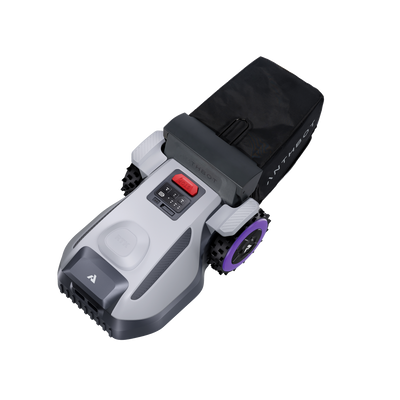
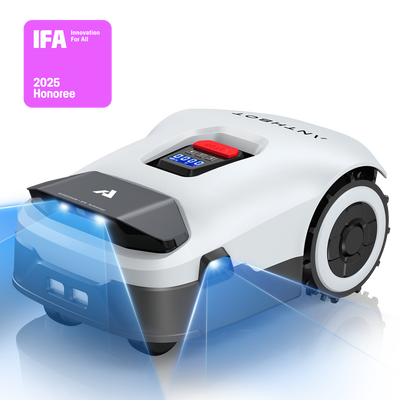
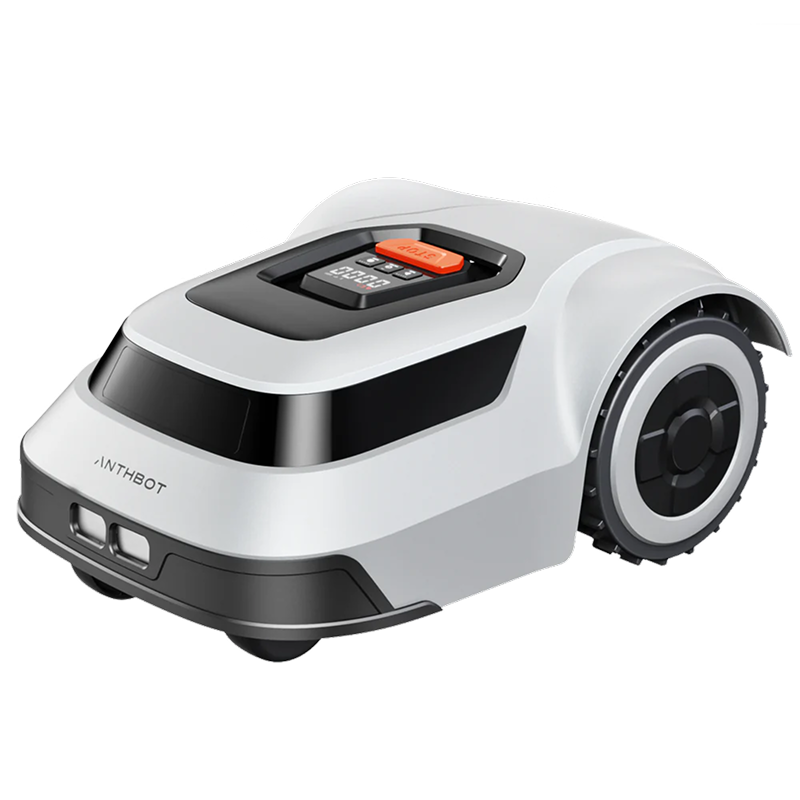
For different lawn sizes and layouts, three ANTHBOT models are worth considering: Genie, M5 Pro, and M9 Pro.
ANTHBOT Genie – For Everyday Edge Mowing
Best for: Smaller to medium-sized lawns and users who want simple wire-free mowing.
Genie combines RTK navigation and EdgeWiz™ edge mowing to help the mower follow lawn boundaries more closely. It also supports multi-zone management, making it suitable for gardens with more than one mowing area.
Key point: A practical option if you want wire-free navigation and automated edge mowing without needing a more advanced system.

ANTHBOT M5 Pro – Advanced Edge Cutting for Smaller Lawns
Best for: Lawns up to 500㎡, especially gardens with more complex layouts.
The M5 Pro uses HoloSense Quad-Fusion Positioning, combining 360° LiDAR, RTK/NetRTK, and Vision. It also features EdgeWiz™ edge mowing and does not require either a perimeter wire or RTK installation.
Its multiple positioning technologies can work together to provide a more complete understanding of the lawn and surrounding environment.
Key point: A strong choice for smaller lawns where navigation flexibility and edge performance are more important than maximum coverage.

ANTHBOT M9 Pro – Advanced Edge Cutting for Larger Lawns
Best for: Lawns up to 1,000㎡ and more complex garden layouts.
The M9 Pro uses the same HoloSense Quad-Fusion Positioning system as the M5 Pro, combining 360° LiDAR, RTK/NetRTK, and Vision. It also includes EdgeWiz™ edge mowing, smart multizone scheduling, and up to 45% (24°) slope capability.
The main difference between the M5 Pro and M9 Pro is mowing capacity, rather than their core edge-cutting technology.
Key point: Choose the M9 Pro when you need the M Pro navigation system but have a larger lawn.

How to Choose a Robot Mower for Better Edge Cutting?
If edge cutting is important to you, don't judge a mower by a single feature. Look at how its cutting system, navigation, and lawn layout work together.
1. Check the Cutting Design
Look at where the cutting disc and blades sit relative to the mower's outer body. A cutting system designed to reach closer to the edge can reduce the amount of uncut grass.
2. Look at the Navigation System
Accurate navigation helps the mower follow the boundary consistently. RTK, LiDAR, Vision, or hybrid systems can provide different advantages depending on your garden.
For a simple lawn, basic navigation may be enough. For a complex lawn with multiple boundaries and obstacles, a more advanced system can be useful.
3. Check for a Dedicated Edge-Mowing Function
Don't assume that every robot mower will automatically make a special pass along the perimeter. If edge performance is important, look for a dedicated edge-mowing mode or edge path planning.
4. Consider Your Lawn Edges
Think about what surrounds your grass:
- Flat pavement: Usually easier to mow close to.
- Stone borders: Performance depends on the height and shape.
- Walls and fences: A strip of grass may remain.
- Raised flower beds: The mower may need additional clearance.
- Irregular edges: More challenging for most models.
5. Match the Mower to Your Lawn
A small, simple lawn doesn't necessarily require the most advanced robot mower. For a larger or more complicated garden, features such as multi-zone management, precise positioning, obstacle detection, and stronger slope capability become more relevant.
A Simple Buying Checklist
Before choosing, ask:
Can the blades reach close enough? → Can the mower navigate the boundary accurately? → Does it have dedicated edge mowing? → Is it suitable for my lawn's edge type?
If the answer is yes to all four, the mower is more likely to deliver the edge-cutting performance you're looking for.
Can a Robot Mower Completely Replace a String Trimmer?
Not always. Even a robot mower with dedicated edge-cutting technology may leave some grass along certain boundaries. The result depends on the mower's design and the type of edge.
Where Robot Mowers Work Well
Robot mowers can usually handle edges more effectively when the grass meets a flat, level surface, such as:
- Paved paths
- Concrete
- Flat stone borders
- Driveways
In these situations, the mower can generally approach the boundary more closely.

Where a String Trimmer May Still Be Needed
Some edges are more difficult for a robot mower to reach safely:
- Vertical walls
- Fences
- Raised flower beds
- Deep or uneven borders
- Corners and narrow spaces
The mower needs to keep its wheels and body away from obstacles, which can leave a small strip of grass that requires manual trimming.

Can Better Edge Cutting Reduce Trimming?
Yes. A mower with good edge-mowing design and accurate navigation can significantly reduce the amount of grass left around the perimeter.
However, the goal should be to reduce manual trimming, rather than assume that a robot mower can eliminate it in every garden.
|
Lawn Edge |
Robot Mower |
String Trimmer |
|
Flat pavement |
✓ Usually effective |
Rarely needed |
|
Concrete |
✓ Usually effective |
Sometimes |
|
Stone border |
✓ Depends on height |
Sometimes |
|
Wall |
△ May leave grass |
Often useful |
|
Fence |
△ May leave grass |
Sometimes useful |
|
Raised flower bed |
△ Limited |
Often useful |
In short: A good robot mower can take care of most routine mowing and substantially reduce edge trimming, but a string trimmer may still be useful for difficult boundaries and areas the mower cannot safely reach.
FAQ
Can robot lawn mowers cut right to the edge?
Some models can cut very close to lawn boundaries, especially along flat surfaces such as pavement or concrete. However, a small strip may remain next to walls, fences, or raised borders.
Why does my robot lawn mower leave grass around the edges?
The mower needs to keep its wheels and body at a safe distance from obstacles. The cutting-disc position, navigation accuracy, edge-mowing path, and boundary type can all affect how much grass remains.
Which robot mower is best for edge cutting?
For smaller lawns, ANTHBOT Genie and M5 Pro are options to consider. For larger lawns up to 1,000㎡, the M9 Pro offers the same advanced M Pro navigation system with greater mowing capacity.
Does blade position affect edge cutting?
Yes. Blades positioned closer to the mower's outer edge can reach more grass near the boundary. However, blade position alone does not determine the final result.
Can a robot mower cut along walls?
It can mow close to some walls, but it usually cannot cut directly against a vertical wall. A small amount of grass may remain because the mower needs to maintain a safe distance.
Can robot lawn mowers replace a string trimmer?
They can reduce the need for manual trimming, but they cannot completely replace a string trimmer in every garden. Difficult areas such as corners, walls, fences, and raised flower beds may still require additional trimming.
Do wire-free robot mowers cut edges better?
Not necessarily. Being wire-free does not automatically mean better edge cutting. Navigation accuracy, cutting-disc design, edge-mowing software, and the type of lawn boundary are more important factors.
What is EdgeWiz™ edge mowing?
EdgeWiz™ is a dedicated edge-mowing function designed to help the mower follow lawn boundaries and reduce uncut grass along the perimeter. It is available on models such as ANTHBOT Genie, M5 Pro, and M9 Pro.


Leave a comment
This site is protected by hCaptcha and the hCaptcha Privacy Policy and Terms of Service apply.