










In recent years, robotic lawn mowers have transformed garden maintenance by shifting from manual work to intelligent automation. Beyond convenience, modern systems emphasize precision, efficiency, and safe operation in complex outdoor environments, making navigation technology the key determinant of performance.
Today's leading navigation systems include RTK, LiDAR, and vision-based solutions, each with distinct strengths in accuracy, obstacle detection, and adaptability. This article focuses on LiDAR robotic lawn mowers, exploring their key advantages and real-world applications in smart lawn care.

Table of Contents
Introduction to Robot Lawn Mowers
Robot lawn mowers are transforming lawn care with smarter and more automated technology. Among the latest innovations, LiDAR robot mowers stand out for their ability to use laser-based mapping and real-time sensing to navigate complex yards, avoid obstacles, and deliver precise mowing performance.
As wire-free mowing technology develops, LiDAR and RTK have become the two leading navigation solutions. While RTK performs well in open spaces, LiDAR offers greater stability in areas with trees, walls, or signal interference, making it an increasingly popular choice for smart lawn care in 2026.

What Positioning Systems Are Currently Used in Robot Mowers?
As wire-free mowing technology continues to evolve, several positioning systems are commonly used in modern robot mowers:
- Boundary Wire – Defines mowing areas using physical perimeter cables.
- RTK – Provides centimeter-level accuracy using satellite positioning.
- Vision – Uses cameras and AI to recognize boundaries and obstacles.
- LiDAR – Uses laser-based mapping for real-time environment detection and navigation.

What is LiDAR ?
LiDAR (Light Detection and Ranging) is a sensing technology that uses laser pulses to measure distances and understand the surrounding environment in real time. In robotic mowers, it emits thousands of laser beams per second that reflect back from objects like trees, walls, or garden furniture. By measuring the return time, the mower can accurately detect object positions and build a detailed 2D or 3D map of the lawn.
This real-time mapping allows LiDAR-based mowers to "see" their surroundings with high precision, enabling accurate navigation, obstacle detection, and adaptive path planning without relying heavily on boundary wires or strong satellite signals.
In practice, this means the mower can move smoothly through complex garden layouts, avoid obstacles intelligently, and maintain stable performance even in environments with trees, fences, or signal interference. As a result, LiDAR has become a key technology driving more autonomous and flexible smart lawn care systems.

Benefits of LiDAR Robotic Lawn Mowers
1. High-precision navigation and obstacle detection
LiDAR uses laser scanning to create real-time maps of the environment, allowing the mower to detect objects such as trees, furniture, and flower beds with high accuracy and adjust its path instantly for smooth mowing in complex gardens.
2. Wire-free and easy installation
Since LiDAR relies on environmental mapping rather than boundary wires, it eliminates the need for physical installation work, making setup faster and allowing more flexible lawn design and adjustments.
3. Stable performance in complex environments
LiDAR navigation does not depend heavily on satellite signals, so it maintains reliable performance in areas with trees, walls, or partial signal blockage, where other systems may become less accurate.

Limitations of LiDAR Robotic Lawn Mowers
1. Higher overall cost
The advanced sensors and real-time processing required for LiDAR-based navigation make these mowers generally more expensive compared to simpler positioning systems.
2. Sensitivity to weather and surface conditions
Environmental factors such as heavy rain, fog, dust, or highly reflective surfaces can sometimes affect laser accuracy and slightly reduce mapping performance.
3. Less optimal for very large open areas
While highly effective in complex spaces, LiDAR may be less efficient than RTK-based systems when covering extremely large, open lawns with minimal obstacles.
When Do You Need a LiDAR Robot Mower?
Complex gardens with many obstacles
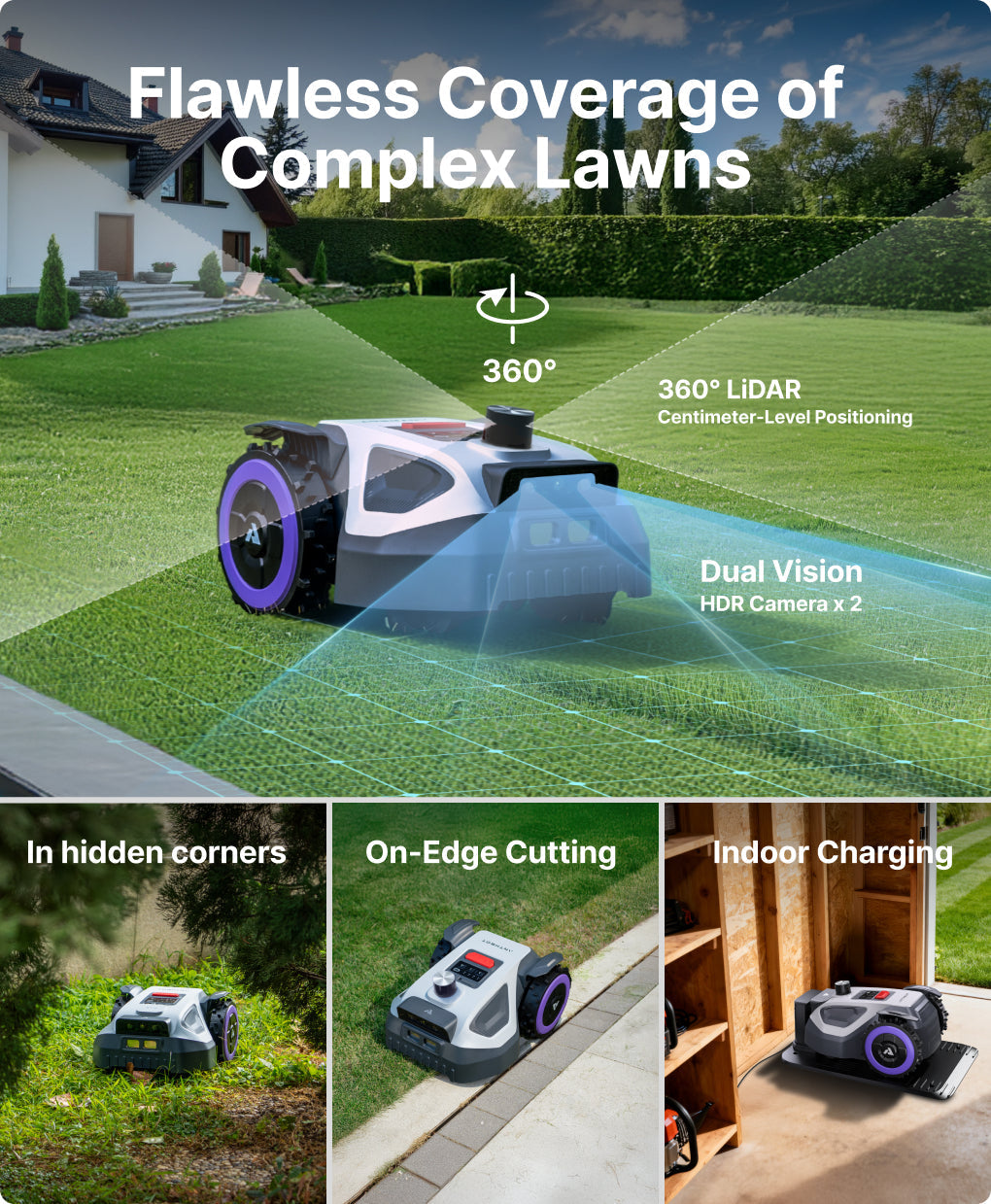
If your lawn has trees, flower beds, garden furniture, narrow passages, or irregular edges, LiDAR is especially useful. It creates a detailed point-cloud map and can detect obstacles in real time, enabling more precise navigation in tight or complicated spaces.
Areas with poor or unstable GPS signals
Unlike RTK systems that depend on satellite signals, LiDAR does not rely on GNSS positioning as its primary method. This makes it more reliable in environments with signal interference, such as areas surrounded by buildings, dense trees, or shaded zones.
Lawns requiring high-precision obstacle avoidance
LiDAR provides centimeter-level spatial awareness by measuring distances using laser reflections. This allows the mower to accurately detect objects and adjust its path instantly, reducing collisions and missed patches.
Night or low-light mowing conditions
Because LiDAR uses laser-based sensing rather than visual input, it is not affected by lighting conditions. It can operate effectively at night or in low visibility, unlike vision-based systems that rely on cameras.
Users who prefer minimal setup complexity
Many LiDAR-based mowers reduce or eliminate the need for boundary wires or external antennas. This makes installation simpler and more "plug-and-play" compared to traditional RTK setups that may require base stations and careful positioning.

LiDAR vs RTK: Which is Better?
Accuracy and Navigation
- RTK delivers centimeter-level positioning accuracy using satellite correction signals, making it ideal for precise, structured mowing patterns in large open areas.
- LiDAR does not rely on satellites. Instead, it builds a real-time local map using laser sensors, allowing the mower to navigate based on surrounding objects rather than global coordinates.
Installation and Setup
- RTK systems usually require a base station or signal setup, which can make installation slightly more complex.
- LiDAR systems are generally easier to deploy since they do not depend on external satellite correction or additional infrastructure.
Terrain Suitability
- RTK performs best in open and unobstructed lawns, but may be affected by trees, buildings, or narrow passages.
- LiDAR is better suited for complex gardens, as it can detect and avoid obstacles like furniture, trees, and flower beds in real time.
Reliability
- RTK depends on stable satellite signals and may experience reduced performance in shaded or obstructed areas.
- LiDAR is more consistent in such environments, but its performance can be influenced by heavy rain, fog, or dust.
Top LiDAR Robot Mowers 2026
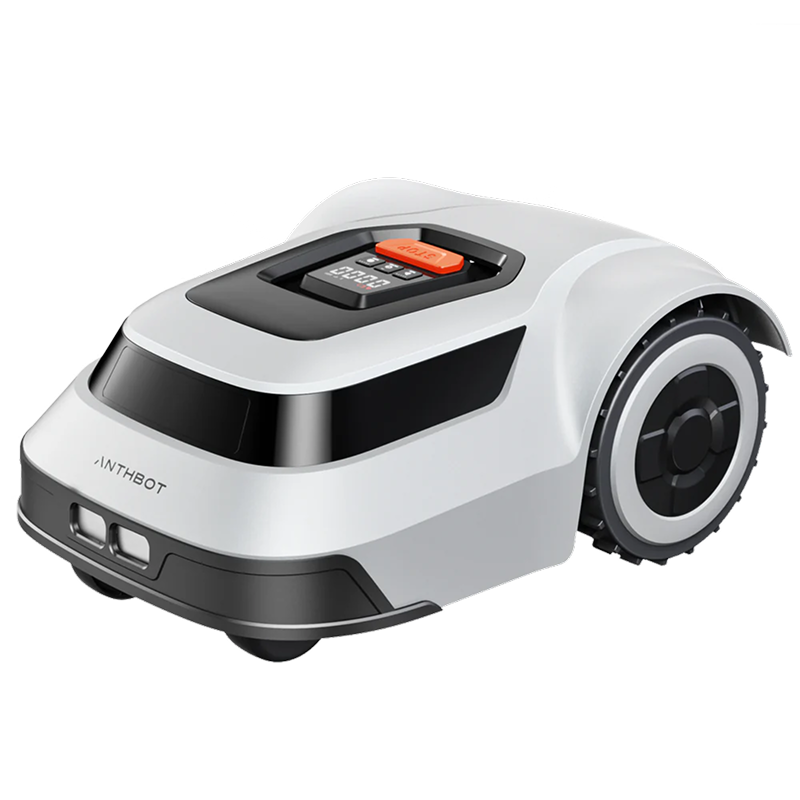
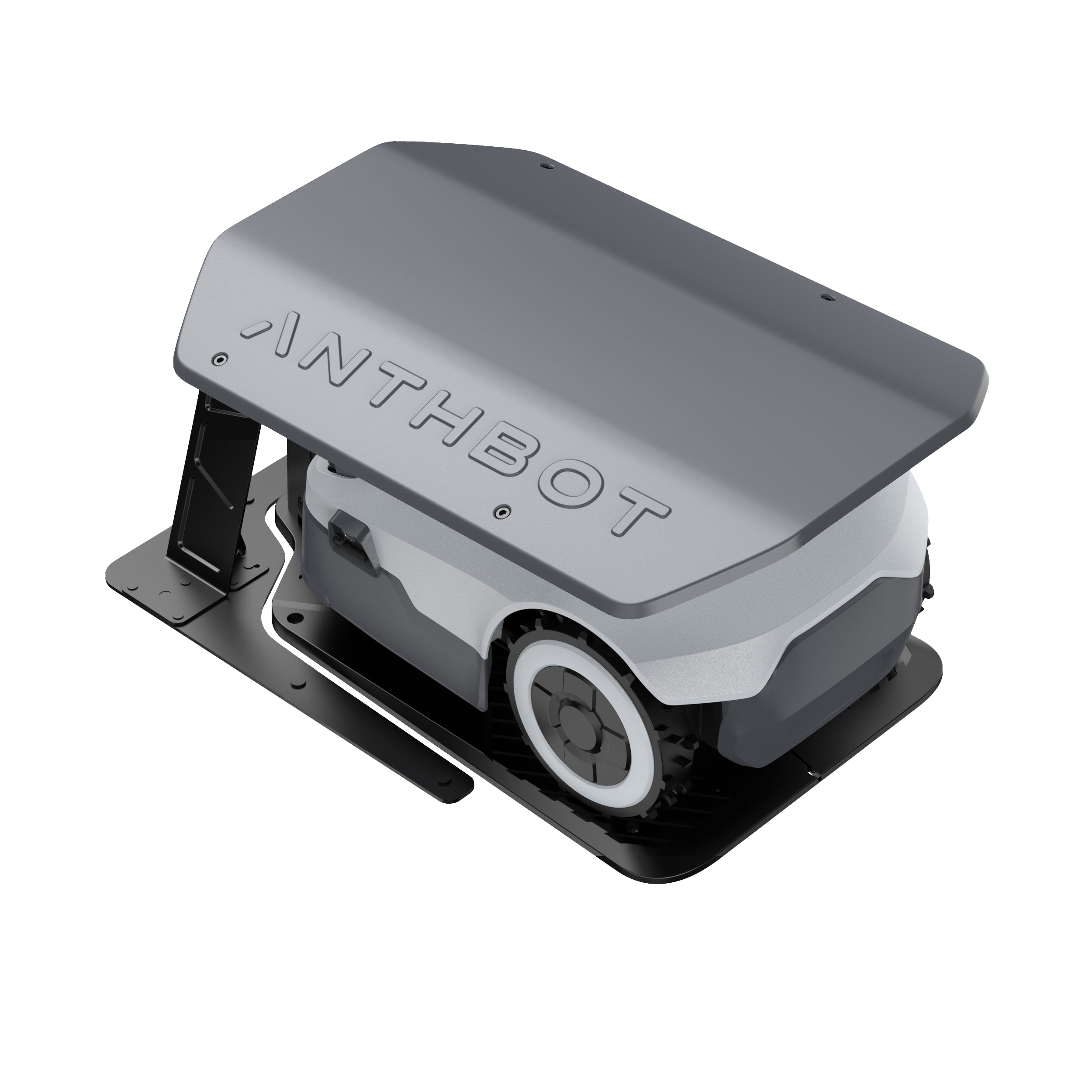
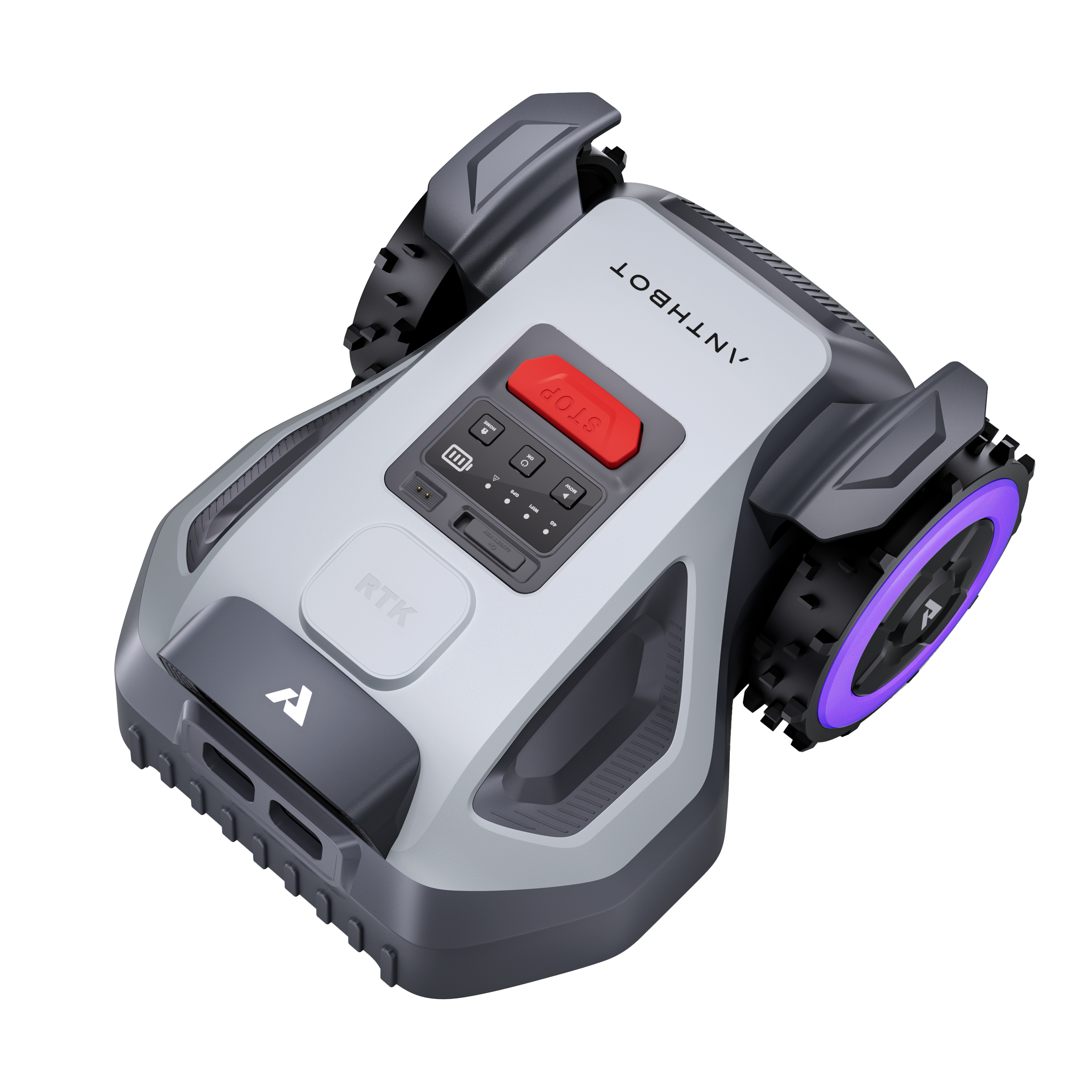
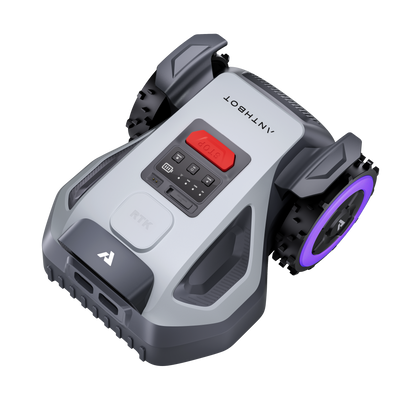
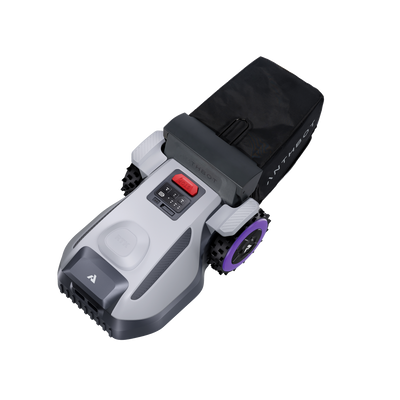
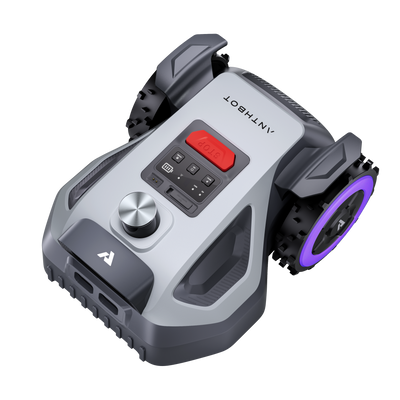
Anthbot M5 LiDAR: 2026 Smart Wire-Free Robot Mower
The Anthbot M5 LiDAR Robot Lawn Mower is one of the most advanced wire-free smart lawn care solutions in 2026, combining 360° LiDAR navigation, AI obstacle detection, and autonomous mapping for a fully hands-free mowing experience.
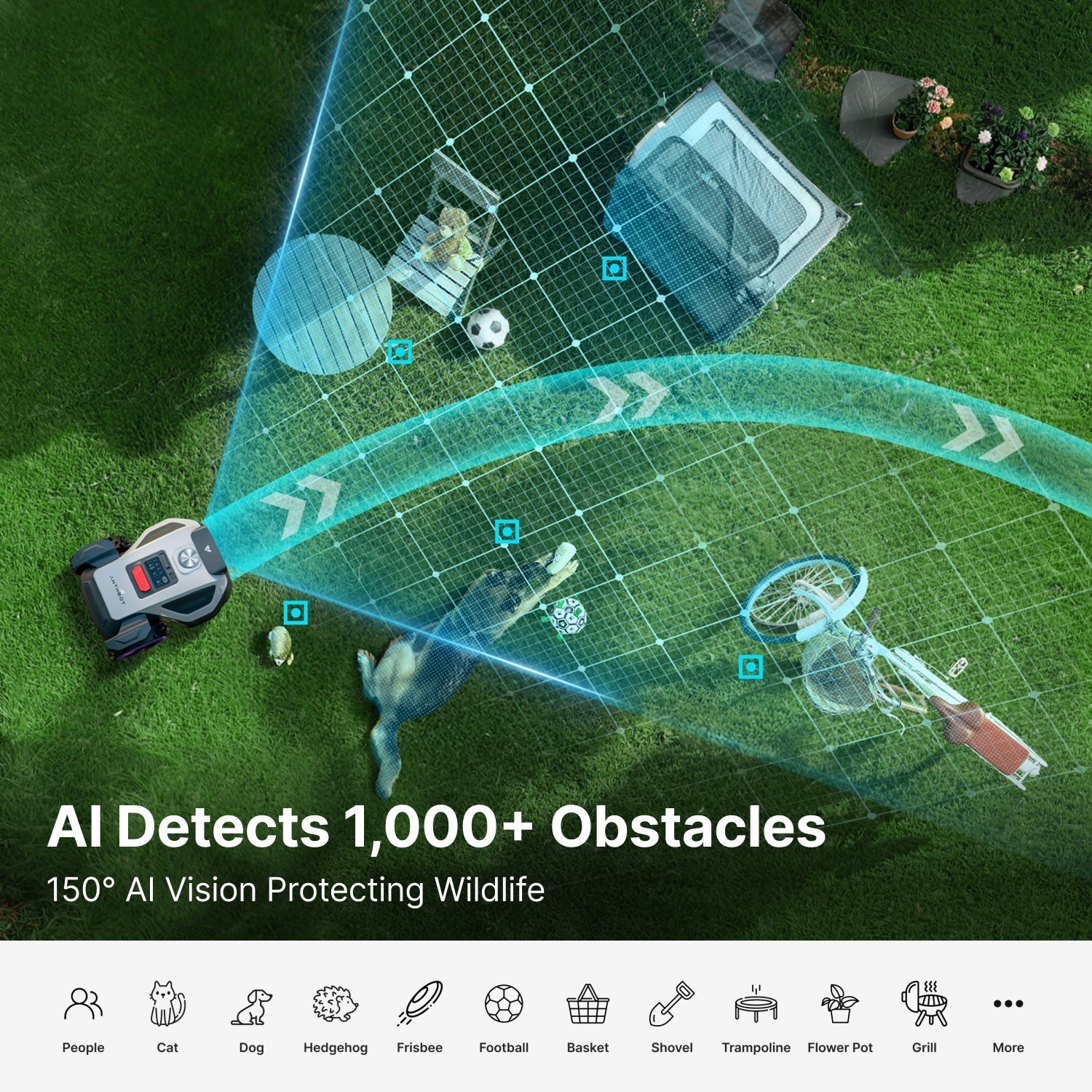
Unlike traditional robotic mowers that rely on boundary wires or unstable GPS signals, the M5 uses 360° LiDAR combined with dual AI vision cameras to build a precise 3D map of your lawn. This enables accurate navigation in complex environments, including shaded areas, narrow passages, and obstacle-heavy gardens.

According to product specifications, the M5 LiDAR is designed for small to medium residential lawns (up to around 500㎡), making it ideal for urban and suburban homes seeking efficient and intelligent lawn maintenance.
Key Features of the Anthbot M5 LiDAR Robot Mower
- 360° LiDAR + AI Vision Mapping for Precise Navigation
- Fully Wire-Free Setup with Automatic Mapping
- Advanced AI Obstacle Detection (1000+ Objects)
- Smart App Control and Intelligent Scheduling
- Strong Terrain Adaptability for Residential Lawns
How to Choose the Best Robotic Mower for Your Garden
Choose the Right Navigation Technology
- RTK Navigation: Best for structured lawns with clear sky visibility and minimal signal interference.
- LiDAR Navigation: Better suited for irregular lawns, shaded areas, and environments where satellite signals may be unstable.
Consider Your Lawn Size and Layout
- Large Open Lawns: RTK robotic mowers deliver centimeter-level accuracy and efficient mowing paths, making them ideal for large residential yards and open lawns.
- Complex or Shaded Gardens: LiDAR robotic mowers use real-time 3D mapping to navigate around trees, flower beds, fences, and narrow pathways without relying on GPS signals.
- Uneven or Obstacle-Rich Terrain: LiDAR navigation provides better adaptability and dynamic obstacle avoidance for slopes and obstacle-filled gardens.
Consider Installation and Lawn Compatibility
- Wire-Free Setu: Modern LiDAR robotic mowers can operate without boundary wires or RTK base stations, making installation faster and more convenient.
- Adaptability to Different Gardens: Choose a robotic lawn mower that can handle slopes, narrow passages, uneven terrain, and obstacle-rich environments.
- Efficient Navigation: Advanced mapping and path-planning technologies help robotic mowers cover the lawn more efficiently while reducing missed areas and repeated mowing.
Performance and Long-Term Value
- Cutting Efficiency: High-end robotic mowers with RTK or LiDAR technology provide more precise mowing patterns and improved lawn coverage.
- Obstacle Avoidance: Smart obstacle detection helps protect trees, flower beds, garden furniture, and pets during operation.
- Durability and Battery Life: Look for robotic lawn mowers with weather-resistant designs, long battery runtime, and automatic charging capabilities for reliable long-term performance.

Frequently Asked Questions
What can LiDAR not detect?
LiDAR robot mowers may struggle to accurately detect highly reflective, transparent, or low-reflectivity objects such as glass surfaces, mirrors, or shiny metal fences. In addition, environmental conditions like heavy fog, dust, or rain can scatter laser signals and reduce detection accuracy. LiDAR also relies on having surrounding objects to reflect signals, meaning performance can be less reliable in completely open or featureless areas.
How accurate is LiDAR navigation?
LiDAR navigation is highly accurate for local mapping and obstacle detection, typically achieving centimeter-level precision (around 2–5 cm). It excels at creating detailed 2D/3D maps of the lawn and precisely measuring distances to nearby objects in real time. However, LiDAR does not provide absolute positioning like GNSS-based systems such as NRTK.
Can LiDAR mowers handle complex lawns?
Yes. LiDAR robot mowers are particularly well-suited for complex lawns with trees, flower beds, garden furniture, toys, and narrow passages. Thanks to real-time 3D mapping and fast laser scanning, LiDAR can instantly detect obstacles and navigate around them with high precision, making it one of the best solutions for obstacle-rich environments.
How large of a lawn can a LiDAR robot mower handle?
LiDAR-based mowers are generally best suited for small to medium-sized lawns. Because LiDAR sensors typically have a sensing range of about 30–40 meters, they perform best in enclosed or structured environments rather than very large open fields. For larger properties (e.g., 1–5 acres), NRTK-based systems are usually more efficient.
Are LiDAR robot mowers worth it?
Yes, LiDAR robot mowers are worth it if your lawn has complex layouts, frequent obstacles, or shaded areas where vision systems may struggle. They offer excellent real-time obstacle detection, high mapping precision, and reliable performance even in low-light conditions. However, for very large, open lawns, a hybrid system combining LiDAR with NRTK or Vision may provide better overall performance.

Leave a comment
This site is protected by hCaptcha and the hCaptcha Privacy Policy and Terms of Service apply.